


 English
  русский
  Español
Home / News / Industry News / Elastic Shoelaces vs Traditional Shoelaces: Convenience, Durability, and Fit Compared

Industry News
Oct 19,2026
Elastic Shoelaces vs Traditional Shoelaces: Convenience, Durability, and Fit Compared
Content
Every parent of a small child, every warehouse operator, and every runner has experienced the same friction point: bending down to tie laces that come loose within hours. A typical office employee ties shoes twice a day, which adds up to close to 500 bends a year just for shoe entry. A logistics picker can bend down seven or eight times in a single shift. A first grader needs independence, a senior needs fewer bends, a physical therapist needs a secure grip on healing feet, and a marathon runner needs precise tension. These needs pull in opposite directions. Elastic shoelaces and traditional shoelaces answer them differently, and that is why the comparison matters. Jiangyin City Baihong Weaving Band Co., Ltd. manufactures both elastic and conventional shoelaces, so the comparison below follows a production and testing perspective rather than a consumer brochure.
Convenience: The Two-Second Advantage of Elastic Shoelaces
Elastic shoelaces remove the tying step, and that single change reshapes the daily wearing experience. A wearer slips into a pair in roughly two seconds instead of spending ten to fifteen seconds on knots. The benefit goes beyond speed. A tied lace creates a localised pressure point on the instep, while an elastic lace spreads the same retention force over a wider area of the tongue. That difference explains why elastic laces are increasingly specified in school shoes, healthcare footwear, and workplace safety styles.
For children learning independent dressing, for people with arthritis, and for staff who switch between shoes during a shift, frictionless entry is a functional requirement. The two-second entry matters at every transition: a warehouse operator moving from safety boots to work shoes, a nurse changing between ward footwear, or a parent walking a child out the door. Baihong produces elastic laces with a braided cotton or polyester cover and a rubber core, which allows the lace to stretch up to 1.6 times its resting length before returning. The construction below is a standard elastic lace design used in premium sports and casual footwear.
- Slip-on convenience for children, seniors, and users with limited hand dexterity
- No loose-lace tripping accidents on production lines, playgrounds, and gym floors
- Lower instep pressure that reduces lace indentations after an eight-hour shift
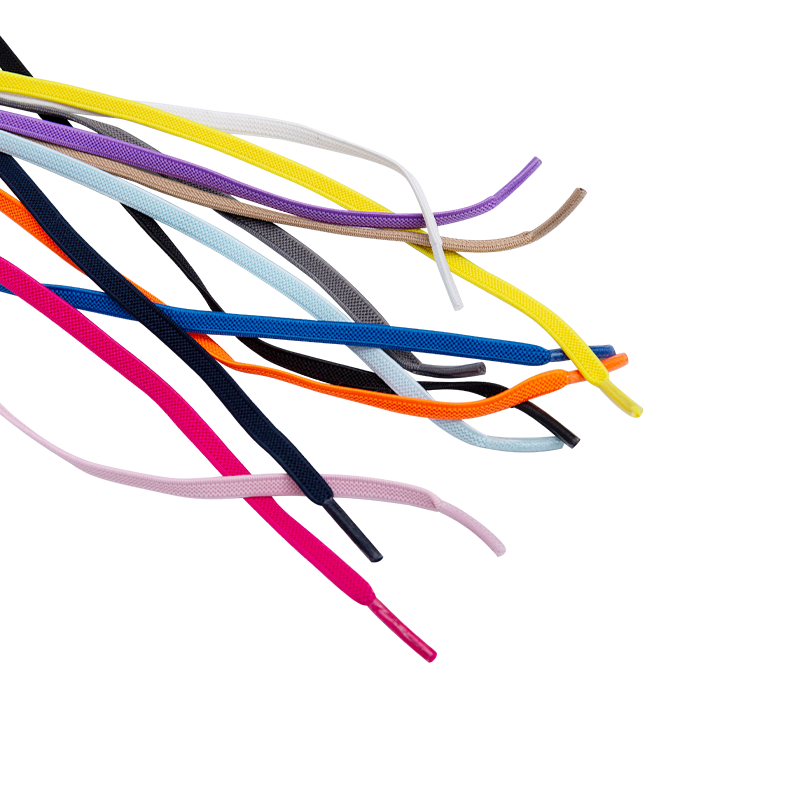 Elastic Laces with Rubber Core for Quick Slip-On FootwearThese elastic laces feature a braided cotton or polyester cover with a rubber core that stretches up to 1.6 times. They allow frictionless entry, ideal for children, arthritis sufferers, and shift workers who need fast transitions.View Product →
Durability: How Elastic Shoelaces Compare to Traditional Laces
Traditional laces outlast elastic laces in material terms, but elastic laces can outperform them when the measure is functional stiffness rather than breakage. A woven cotton or polyester lace has no moving part. It wears by abrasion at the eyelet, and a quality pair can hold its geometry for two to four years. An elastic lace contains a rubber core or elastomer yarn that loses recovery force with every stretch cycle. After six months of daily use, a mid-grade elastic lace can lose ten to fifteen percent of its original recovery force, depending on the rubber compound and weave density.
High-density braided structures reduce this rate because the outer yarn shields the elastomer from direct UV exposure. That loss sounds small, but in practice it means the shoe collar starts to pull away during walking, creating heel slippage and blisters. From a production standpoint, the fix is traceable. A denser braid and a higher-grade rubber core slow the relaxation process, and Oeko-Tex certified raw material control reduces the variability in rubber ageing behaviour.
| Criterion | Elastic Shoelaces | Traditional Shoelaces |
| Primary failure mode | Rubber fatigue and stretch relaxation | Eyelet abrasion and fibre fraying |
| Typical service life | 6-12 months of active use | 2-4 years of active use |
| UV resistance | Moderate, outer yarn protects the core | High, polyester and cotton are UV-stable |
| Washability | Machine washable without knot distortion | Machine washable, loose ends can fray |
| Safety profile | No loose bow to catch on obstacles | Knot can untie during activity |
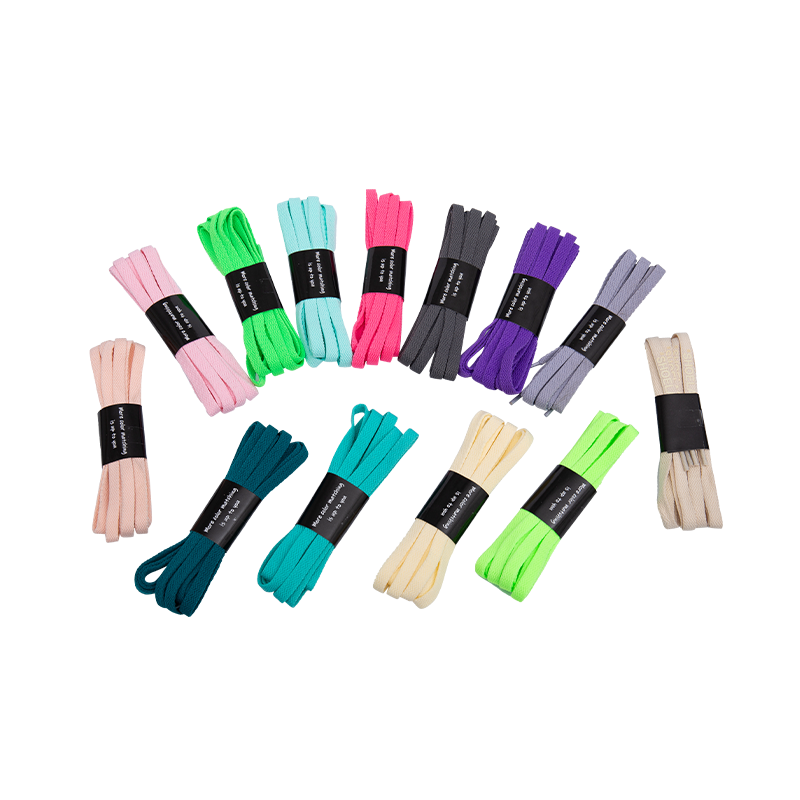
 Flat Polyester Laces in 8mm Width with 100 ColorsThese flat laces are made of durable polyester with an 8mm width and plain weave to resist loosening. They deliver clean looks and secure fastening for sports, casual, and fashion boots.View Product →
Fit Precision versus Consistent Compression
The fit winner depends on whether the wearer needs micro-adjustment or even pressure across the instep. Runners and hikers lean toward traditional laces because they can loosen the forefoot, lock the ankle, and use a runner's loop to fine-tune tension. Elastic laces cannot match that granular control. They do provide a constant pre-tensioned grip that follows the foot through the full range of motion. For wide feet, high insteps, and feet that swell during the day, elastic laces accommodate the volume change without asking the wearer to bend down at noon.
For physiotherapy and rehabilitation footwear, elastic laces are recommended when the patient cannot bend down or grip thin laces. A single elastic lace also reduces the number of small parts a patient has to manage. The chart below compares the two types against four design characteristics that a product team can measure.
Design Benchmark Comparison (1-10)
Elastic Traditional
Convenience
Fit Precision
Durability
All-Day Comfort
Benchmark scores based on typical material properties and general wearer feedback.
At the design level, the question becomes which failure mode is more acceptable to the target user: an untied knot that trips a worker, or a lace that has softened and stopped supporting the arch. For a related discussion on how elastic webbing design supports accurate foot fit, the same principle applies at a wider width.
Material and OEM Sourcing Trade-Offs
The sourcing decision comes down to how much recovery force the product actually needs and what the customer expects after the first season. Elastic shoelaces are built on an elastomer core, wrapped in spun yarn, and require tight quality control against rubber ageing. Traditional flat laces are woven or braided from polyester or cotton and contain no stretch material to monitor. That difference changes the supplier list.
Elastic laces add a rubber supplier to the bill of materials, while traditional laces stay simpler but carry a higher risk of eyelet abrasion. A footwear brand that mixes both families in one collection usually wants standardised colour matching between the two, and ink coverage differs when printing logos on a stretch base versus a rigid base. Heat-transfer printing at high temperatures can shrink the rubber core, so die-cut silicone or low-temperature curing is a safer route.
Elastic Shoelaces
- Lower instep pressure
- Two-second entry and exit
- Machine washable
- Requires rubber-ageing control
Traditional Shoelaces
- Exact fit adjustment
- Three to four year service life
- Simpler production runs
- Classic design language
For a broader picture of the category, refer to this overview of wholesale shoelace types. Baihong also supplies elastic webbing for shoe manufacturers who need the same recovery properties in a wider band format.
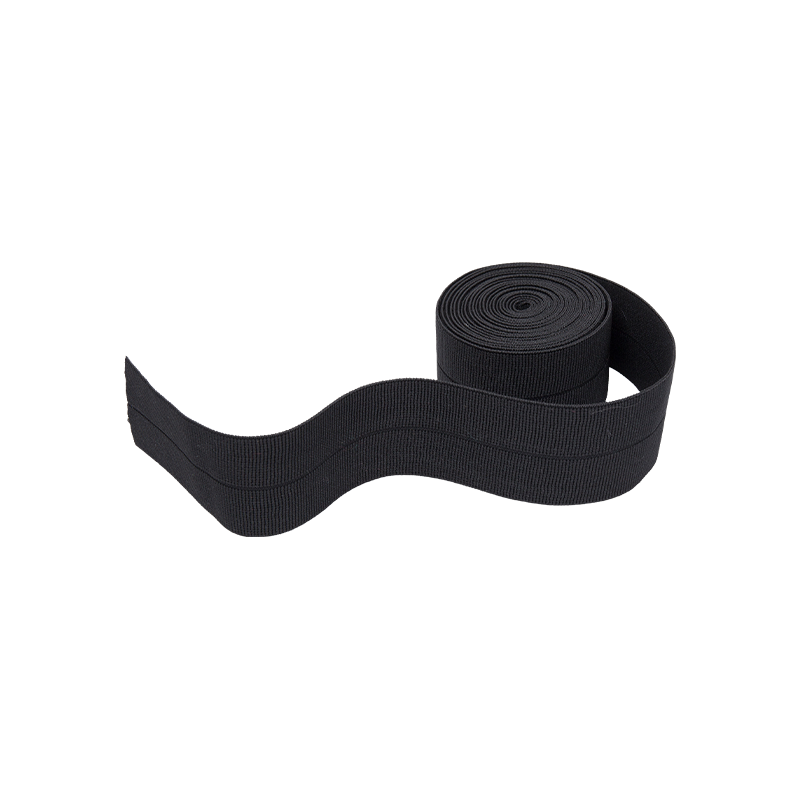 Elastic Webbing for Shoes in Wide Width RangeThis elastic webbing offers 1 to 20cm widths with stretch and recovery for shoe uppers and straps. Available in glossy, suede, or striped finishes, it provides durability and comfort for various footwear designs.View Product →
Who Benefits Most from Each Lace Type
Elastic laces serve users who prioritise speed and comfort; traditional laces serve users who prioritise precision and long service life. The split is not arbitrary. It follows a clear set of needs that product teams can map against their target audience. Wholesale demand for elastic laces has grown with the rise of slip-on running shoes and designed-for-safety footwear, while classic flat laces remain the default for formal and performance lines.
- Children and seniors: elastic laces win by supporting independent dressing and removing a common tripping hazard
- Runners and athletes: traditional laces win because forefoot and ankle tension can be set independently
- Logistics and manufacturing workers: elastic laces win by eliminating re-tying breaks during a shift
- Office and formal settings: traditional laces win by preserving a classic silhouette under trousers
- Wide or swelling feet: elastic laces adapt to volume changes without requiring a mid-day adjustment
- Custom branding programs: both families can be produced with custom logos and Pantone-matched colours, but elastic laces need stretch-compatible printing
70% Time saved per shoe entry
2-4 Years for traditional lace service life
1.6x Stretch ratio for quality elastic laces
Frequently Asked Questions
Can elastic shoelaces be transferred between different pairs of shoes?
Yes, provided the length matches the eyelet count. Elastic laces can be removed and fitted into another pair with the same number of eyelets as long as the rubber core has not lost its recovery force. This is a common practice for parents moving laces between school shoes at the start of a term.
Do elastic shoelaces stretch out permanently?
Some relaxation always occurs. A well-built elastic lace with a dense braid loses only a small percentage of its recovery force, while a lower-grade elastic lace can go soft within months. The difference is usually traced to the rubber denier and the weave structure.
Are traditional shoelaces always better for running?
For most competitive runners, yes. The ability to tune tension between the forefoot and ankle reduces friction and helps lock the midfoot. A small group of casual walkers prefer elastic laces for their ease of entry, but performance runners stay with traditional laces.
Which shoelace type should a school program choose for children?
Elastic laces are safer in playground and classroom environments. They let children put shoes on independently and reduce the chances of a loose lace catching on equipment. The design must still allow enough recovery force to keep the shoe from slipping off during running.
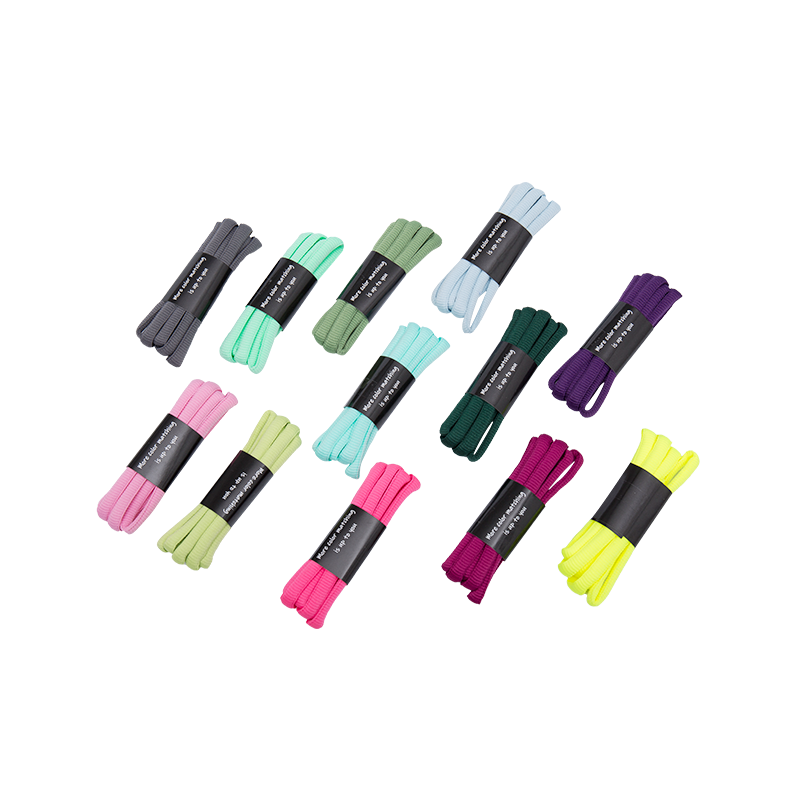

Over the years, we have been providing high-quality, safe and reliable products for the clothing and footwear industries.
- Quick Links
- Contact Information
-
-
 NO.137-1 Chenglu Road, Huashi Town, Jiangyin City214421, Jiangsu, China
 -
 +86 138-0616-9220
 -
 Lhbhzd@126.com
bh@jyribbon.com
sales2@jyribbon.com
-
- Mobile QR Code

