


 English
 русский
 Español
Home / News / Industry News / How to Choose Polyester Webbing for Bags, Mattresses and Outdoor Products

Industry News
Nov 23,2026
How to Choose Polyester Webbing for Bags, Mattresses and Outdoor Products
Content
- 1 Start with the failure mode, then specify polyester webbing
- 2 Match polyester webbing construction to bags, mattresses and outdoor products
- 3 Four specifications that predict field performance
- 4 Test polyester webbing in the finished assembly before bulk
- 5 Supplier checks that protect export orders
- 6 FAQ: polyester webbing selection
A 38 mm black polyester webbing can pass a 2,500 N tensile test and still fail in a bag handle after two weeks because the real failure point is the stitch line, not the strap body. That is the purchasing problem behind how to choose polyester webbing for bags, mattresses and outdoor products: one material family, three different load paths and three different quality risks. The right order is failure mode first, then width, thickness, weave, elongation, finish and test method.
Buyers often compare offers on price per meter and color card. A better comparison uses the conditions that create rejects: seam abrasion in bags, creep and needle cutting in mattresses, and UV exposure, wet grip and coating adhesion outdoors. Those conditions turn a generic quote into a measurable specification.
25-38 mmCommon bag strap width range
1.8-2.4 mmTypical load-bearing bag thickness
2,500-5,000 NIndicative 25 mm high-tenacity range
4-5Target gray scale for rubbing fastness
Definition: Polyester webbing is a narrow woven textile made from high-tenacity polyester yarns, with width, thickness, weave, elongation and finish engineered for load-bearing or positioning tasks.
Start with the failure mode, then specify polyester webbing
Choose polyester webbing by writing one failure sentence for each product, then converting that sentence into measurable specifications. A bag handle that tears at the seam needs different tests from a mattress border that creeps under load or an outdoor strap that chalks after UV exposure.
This sounds obvious, but it changes the quote sheet. Instead of asking for strong 38 mm polyester webbing, the buyer can ask for a heat-set plain weave, 38 mm plus or minus 1.5 mm, 2.0 mm thickness, minimum 3,000 N breaking strength, stitch-line abrasion tested to an agreed method, and colorfastness to rubbing at grade 4 or better. The supplier can then quote to a real requirement.
Weak brief
- Black 38 mm polyester webbing
- Good quality, strong material
- Best price for 10,000 meters
Strong brief
- Heat-set plain weave, 38 mm plus or minus 1.5 mm
- Minimum 3,000 N breaking strength at 200 mm gauge
- Stitch-line abrasion and edge curl tested on finished handle
A specification is not a wish list. It is a pass or fail value that the supplier, the sewing line and the inspection report can all read the same way.
Match polyester webbing construction to bags, mattresses and outdoor products
The same loom state cannot serve all three end uses. Bags reward abrasion resistance and edge stability, mattresses reward width control and low elongation, and outdoor products reward UV stability plus coating performance.
Bags: control seam abrasion and edge curl
For bags, select a heat-set plain or twill polyester webbing in 25-38 mm width and roughly 1.8-2.4 mm thickness. The handle is only as good as the stitch line: a soft edge that curls during sewing can create needle damage, and a thin seam allowance can abrade in use. Review the polyester webbing for backpacks discussion before fixing the edge finish.
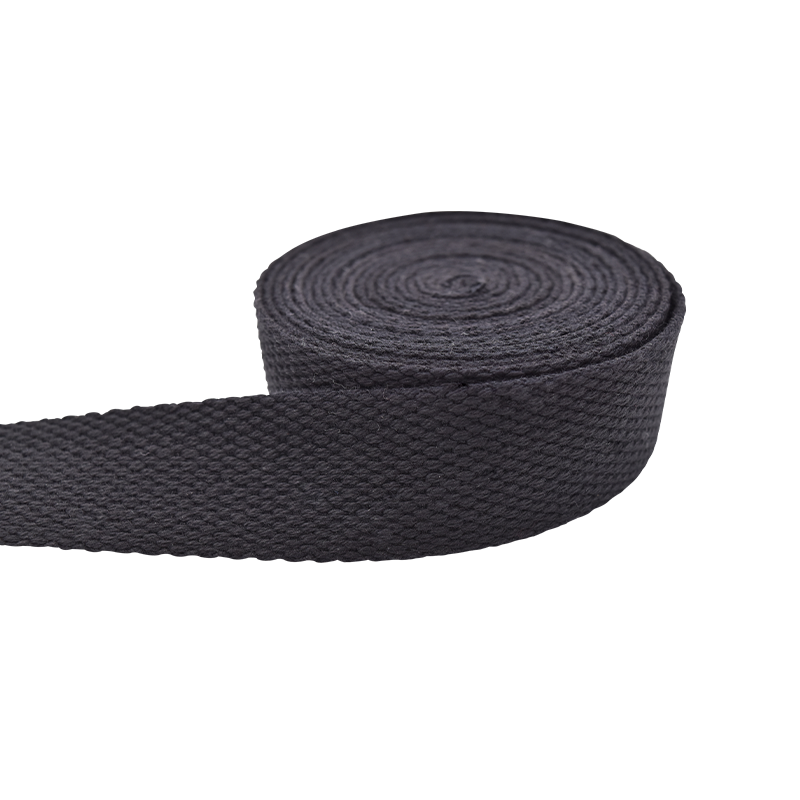 Belt Polyester Webbing for Belts and StrapsSuitable for belt and bag-strap projects needing smooth texture, strength, and wear resistance; width, color, and length options can be customized.View Product →
Mattresses: specify width tolerance and low elongation
Mattress polyester webbing should hold handle shape, resist needle cutting and stay within width tolerance after sewing. Specify elongation at the working load, not only breaking strength. A 25-50 mm webbing that stretches unevenly can make handles feel loose after a few hundred lift cycles.
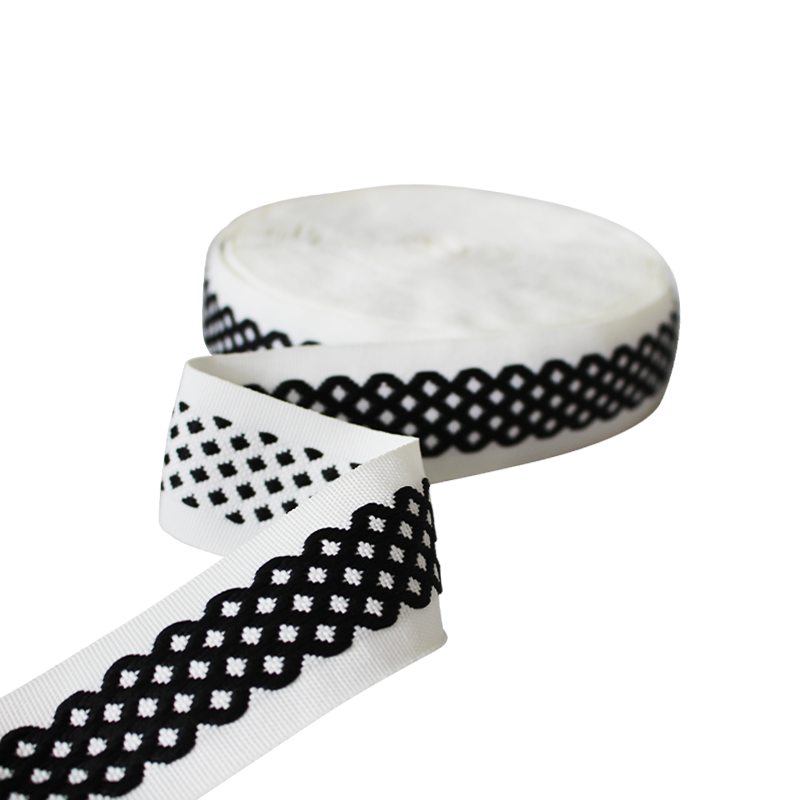 Mattress Polyester Webbing for Structural SupportFor mattress manufacturing, this wear-resistant polyester webbing offers adjustable width, color, and elasticity to support different firmness and support requirements.View Product →
Outdoor products: test UV, wet grip and coating adhesion
Outdoor polyester webbing needs UV stabilization, colorfastness to light and water, and, where grip matters, a silicone or nonslip finish that survives flexing. Coating adhesion matters more than coating thickness: a thick coating that peels in wet conditions is worse than a thinner, well-bonded finish.
 Non-Slip Polyester Webbing with Latex CoatingA textured latex-coated polyester webbing for tactical, sports, outdoor, and safety gear where secure grip, durability, and heat resistance are needed.View Product →
The best construction is the one that controls the first field failure, not the one with the highest headline tensile number.
Four specifications that predict field performance
Measure width, thickness, weave and finish before you debate color. These four specifications explain most field failures in polyester webbing for bags, mattresses and outdoor products.
| Specification | What to write on the purchase order | Failure it controls |
| Width and thickness | Nominal value plus a pass or fail tolerance at three points per meter | Handle distortion, buckle fit and sewing-line rejects |
| Weave and pick density | Plain, twill or satin, with yarn count and picks per unit recorded | Edge curl, seam slippage and abrasion life |
| Elongation at working load | Test method, gauge length, speed and load value stated together | Handle creep, sag and unstable mattress borders |
| Finish and colorfastness | Heat setting, coating type and fastness grades to rubbing, light and water | Fading, coating peel and wet-grip loss |
Put the test method next to every number. A strength figure without gauge length and test speed is not a purchasing specification.
Test polyester webbing in the finished assembly before bulk
Approve bulk only after the sample has passed the tests that match your failure mode, not a generic list. A practical scorecard weights seam abrasion for bags, elongation and width for mattresses, and UV plus coating adhesion for outdoor products.
Indicative first-test priority score
Bag seam abrasion
5
Mattress elongation
4
Mattress width control
4
Outdoor UV resistance
5
Outdoor coating adhesion
4
Scores show typical first-test priority from common complaint patterns. Adjust them to your own field returns.
- Tensile and elongation by an agreed method, with rate and gauge length recorded.
- Stitch-line abrasion using the actual thread, needle and seam allowance.
- Width and thickness at three points per meter after heat setting and after flexing.
- Colorfastness to rubbing, light and water for outdoor or dark shades.
- Coating adhesion and flex cracking for silicone or nonslip finishes.
Run the first test on the finished assembly, not only on loose webbing. A strap that passes tensile testing can still fail when the seam, buckle and edge are combined.
Supplier checks that protect export orders
Supplier capability matters most when the order mixes widths, colors, coatings and packing. Jiangyin City Baihong Weaving Band Co.,Ltd, based in Jiangyin near Shanghai and Ningbo ports, has produced narrow fabrics since 2002, operates its own research and development team and testing laboratory, and holds Oeko-Tex Standard 100 certification.
Check four things before a bulk release:
- Yarn and heat-setting records, not only a sample card.
- Width and thickness tolerances written as pass or fail values.
- Batch traceability for color and coating lots.
- Packing tests that match the customer unwinding or cutting line, including roll length, core size and join limits.
Question to ask: Which test method, gauge length and test speed will appear on the inspection report? A supplier who cannot name the method cannot reproduce the result.
FAQ: polyester webbing selection
What width of polyester webbing should I use for bag straps?
Use 25-38 mm for most consumer and travel bags, and move to 38 mm or wider for load-bearing handles. Confirm stitch pattern, edge finish and buckle fit before fixing the final width.
How do I test polyester webbing for mattresses?
Test width tolerance, elongation at the handle load, seam strength and needle cutting. A sample can look correct yet fail after repeated lift cycles if elongation is unstable.
Is coated polyester webbing better for outdoor products?
Only if the coating matches the failure mode. Silicone can improve grip and water shedding, but adhesion and flex cracking must be tested on the finished part.
What should I ask a polyester webbing supplier before bulk production?
Ask for yarn type, heat setting, width and thickness tolerances, colorfastness results, tensile and elongation data, and the test method used. Require a sealed sample and a signed inspection plan.
The lowest meter price is only useful when the webbing survives the sewing line, the assembly test and the first season of use.

Over the years, we have been providing high-quality, safe and reliable products for the clothing and footwear industries.
- Quick Links
- Contact Information
-
-
 NO.137-1 Chenglu Road, Huashi Town, Jiangyin City214421, Jiangsu, China
-
 +86 138-0616-9220
-
 Lhbhzd@126.com
bh@jyribbon.com
sales2@jyribbon.com
-
- Mobile QR Code

