


 English
  русский
  Español
Home / News / Industry News / Round vs Flat vs Elastic Shoelaces: A Complete Buyer's Guide for Every Footwear Type

Industry News
Oct 05,2026
Round vs Flat vs Elastic Shoelaces: A Complete Buyer's Guide for Every Footwear Type
Content
- 1 What Actually Differentiates Round, Flat, and Elastic Shoelaces?
- 2 Round Shoelaces Win Where Tension Retention Matters
- 3 Flat Shoelaces Deliver Comfort and a Clean Look for Casual Wear
- 4 Elastic Shoelaces Remove the Need to Tie While Keeping the Fit Secure
- 5 Matching Round vs Flat vs Elastic Shoelaces to Footwear Type
- 6 Procurement Considerations for Footwear Brands and Retailers
- 7 Frequently Asked Questions
Most shoes ship with flat laces because they are cheap to produce and easy to print, but the shape of a lace changes fit more than most buyers expect. A trail runner whose laces loosen on the second kilometer will not be satisfied with wide cotton ribbon, while a parent dressing a five-year-old in school shoes wants an elastic band that slips on without a knot. The lacing system is the fastest way to adjust fit, and the choice between round, flat, and elastic shoelaces is the first decision a footwear brand or a thoughtful buyer makes.
What Actually Differentiates Round, Flat, and Elastic Shoelaces?
The cross-section geometry and elastic response of a shoelace determine how it translates lacing tension into foot retention.
Round shoelaces are cylindrical cords, usually 2.5 mm to 4 mm in diameter, that compress only slightly under load. Their circular cross-section concentrates the force of the knot into a small contact area and creates high friction between the two halves. Flat shoelaces are woven ribbons, usually 5 mm to 10 mm wide, that distribute pressure over a larger surface against the tongue. Elastic shoelaces are built around a stretchable core, typically spandex or PP rubber wrapped in polyester or cotton, which lets the band lengthen when the foot moves.
Definition: Tension distribution describes how a shoelace spreads the force of a tightened lace across the instep. Flat laces spread force across the full ribbon width; round laces concentrate it along a narrow line, which raises local pressure but increases knot friction.
| Feature | Round | Flat | Elastic |
| Cross-section | Cylindrical cord | Flat ribbon | Band with stretch core |
| Typical dimension | 2.5 to 4 mm | 5 to 10 mm | 6 to 10 mm |
| Tension distribution | Concentrated | Spread | Adaptive |
| Knot behavior | High retention | Moderate | No knot needed |
| Best footwear | Performance and trail | Casual and dress | Slip-on and recovery |
Round Shoelaces Win Where Tension Retention Matters
Choose round shoelaces when the lace must stay tight through high-impact movement.
Running, basketball, hiking, and competitive training all demand knots that hold under vibration and lateral load. Comparative wear tests on athletic footwear show that round laces reduce re-tying frequency by roughly 30% compared with flat laces of the same material. The cylindrical surface produces more friction at the knot, and the cord seats cleanly into the eyelet without creasing.
Round laces also handle moisture better. A waxed round cord sheds water and mud, which is why trail runners and mountaineers reach for round rather than flat forms. For high-volume production, the round format tolerates eyelet size variation without fraying because the cord does not fold on itself.
- Trail running and hiking on wet or muddy terrain
- Basketball and tennis with lateral cutting movements
- Long-distance events where foot swelling changes fit
- Boots and technical footwear with reinforced eyelets
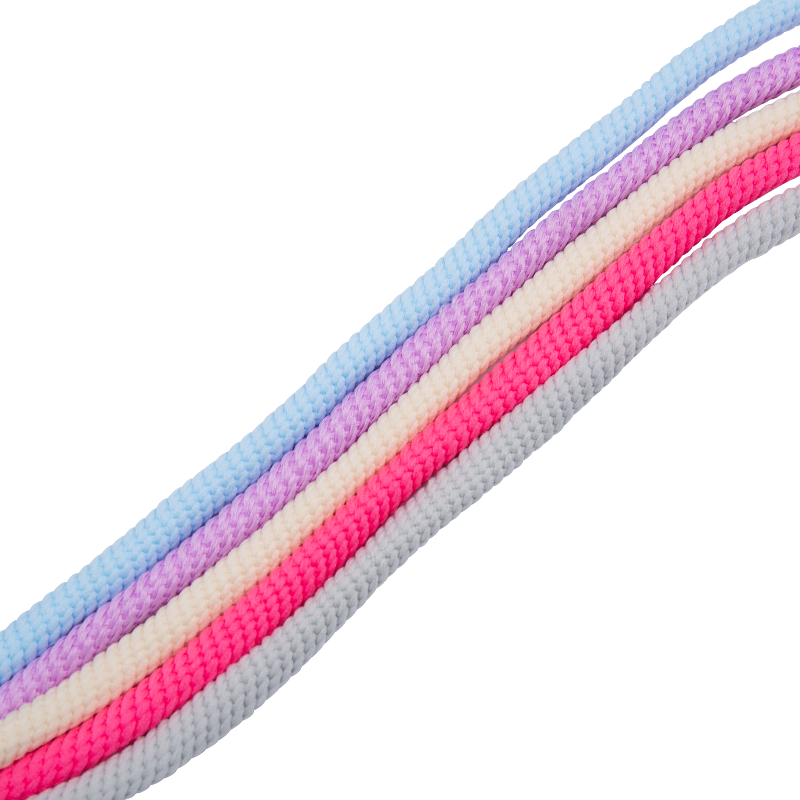
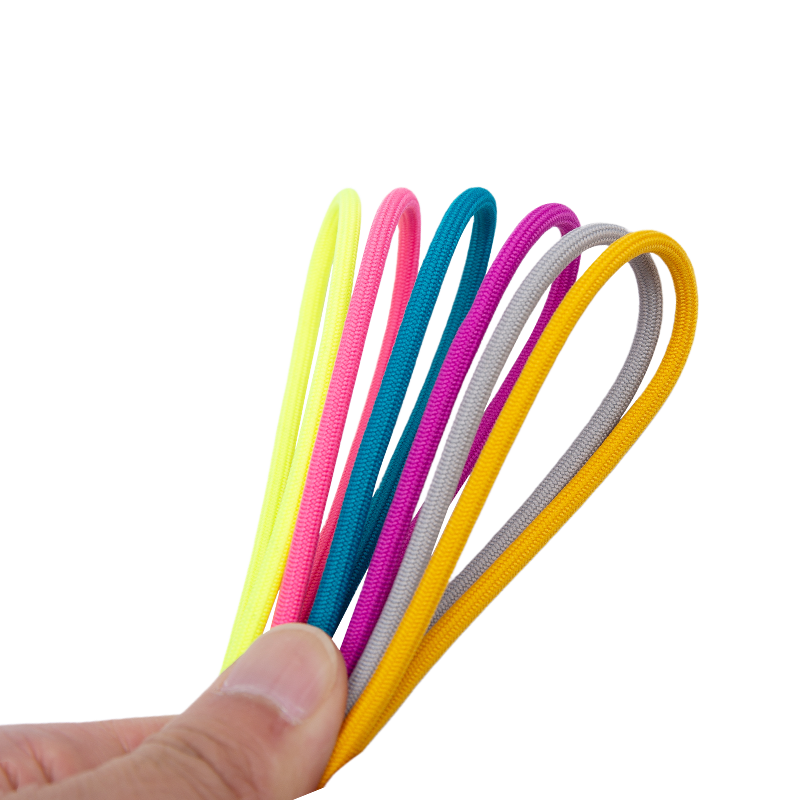 Round Laces with Reinforced Core for Durable FootwearRound laces feature a cylindrical shape with a built-in core and typically measure 5-6 mm. They are made from nylon or polyester for durability and are ideal for dress shoes, though their smooth surface may require double knotting to prevent slipping.View Product →
For a deeper walkthrough, this guide on when round laces are the right choice covers trail, gym, and daily use cases.
Flat Shoelaces Deliver Comfort and a Clean Look for Casual Wear
Flat shoelaces are the default for casual footwear because the wide webbing spreads pressure evenly across the tongue and the front profile matches dress and skate silhouettes.
Skate shoes, chukkas, oxfords, and low-top sneakers all use flat laces for a reason. The wide ribbon avoids pressure ridges on the instep, and the flat surface accepts repeated folding without creasing. An 8 mm flat lace distributes over roughly 2.5 times the surface area of a 3 mm round lace at the same tension, which is why people with sensitive insteps prefer flat laces.
Strengths
- Even pressure distribution over the tongue
- Wide canvas for logo printing and jacquard patterns
- Lower pressure points on sensitive feet
Trade-offs
- Weaker knot retention under lateral force
- Wider profile required for larger eyelets
- Slightly higher unit cost than round cord
- Dress shoes, oxfords, and chukkas
- Skate and lifestyle sneakers
- Kids school shoes with flat cotton laces
- Custom printed and jacquard branding programs
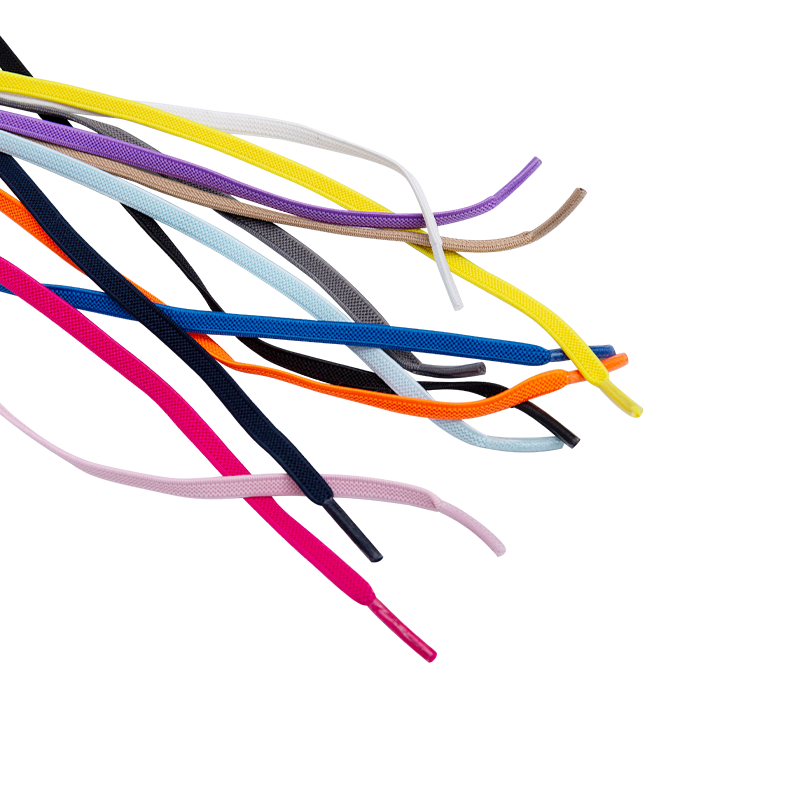
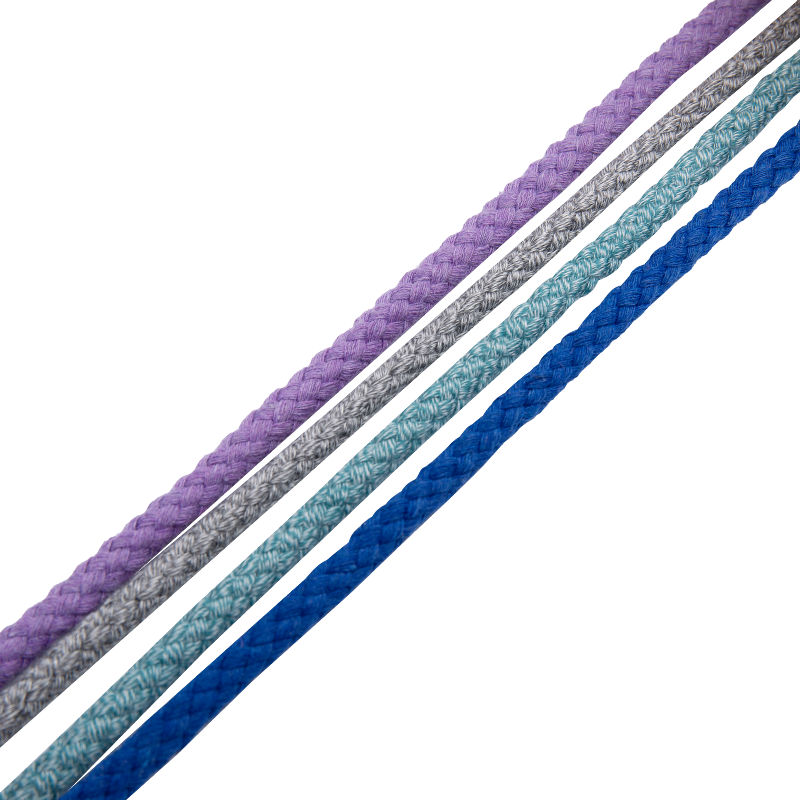
 Flat Laces in 8mm Polyester with Wide Color SelectionFlat laces offer an 8mm width and are constructed from polyester with a plain weave for reduced loosening. With up to 100 colors available, they suit sports shoes, casual footwear, and boots, providing a clean look and comfort.View Product →
Flat laces also open the widest range of colorways and decorations, as covered in this guide to flat laces as a tool for personalized dressing.
Elastic Shoelaces Remove the Need to Tie While Keeping the Fit Secure
Choose elastic shoelaces when fast entry, slip-on convenience, or adaptive fit matters more than the ritual of tying a bow.
Elastic laces stretch and recover, so the shoe does not need a fixed closed system. For triathletes this saves seconds in transition. For elderly users with limited hand mobility it eliminates bending down to tie. For children, the stretch accommodates half a size of growth without replacing the laces.
Elastic laces perform best in low-to-moderate load activity. In high-cut shoes with aggressive rimming, the continuous stretch can over-tighten mid-sprint and cause the foot to slide inside the shoe. Select a lace with a measured stretch range of 30% to 70% for the target use case.
- Slip-on and post-operative shoes
- Kids and senior footwear without lacing
- Triathlon and bike-to-run transitions
- Recovery and therapeutic footwear
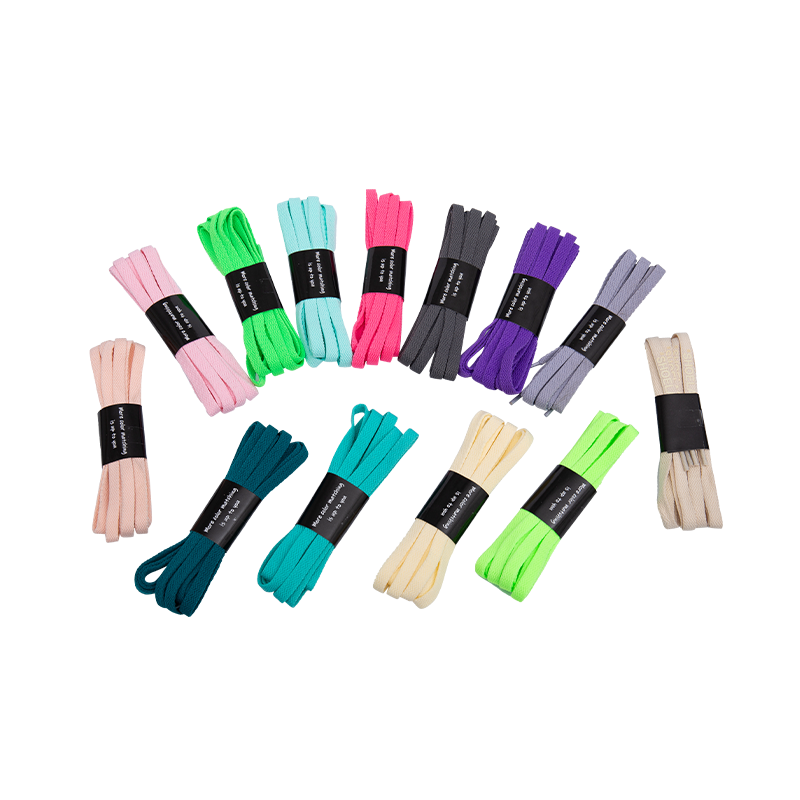
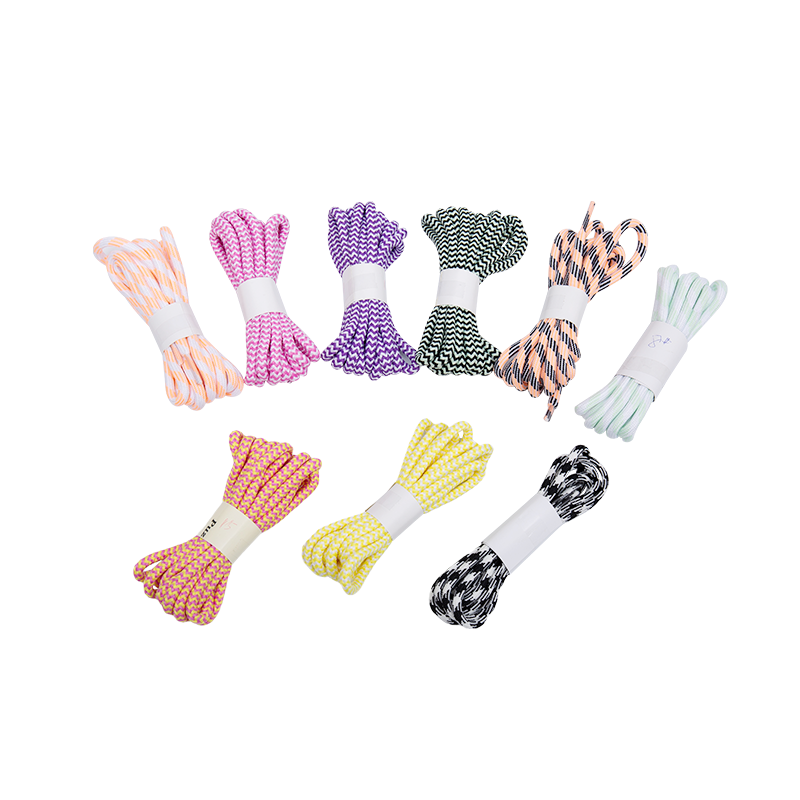
 Elastic Laces for Convenient Slip-On Fit in Various ShoesElastic laces come in round or flat forms made from high-elasticity materials, transforming shoes into easy slip-ons. They are common in children's footwear and can integrate with metal buckles for a stable no-tie system, allowing adjustable tightness.View Product →
Matching Round vs Flat vs Elastic Shoelaces to Footwear Type
Match the lacing shape to the load path: high-impact activities favor round laces, casual and dress silhouettes favor flat laces, and slip-on or adaptive applications favor elastic.
The chart below compares the five factors that matter most when choosing shoelaces for a specific footwear type.
| Footwear type | Recommended shape | Material | Why it works |
| Running shoes | Round | Polyester or waxed cotton | Tension retention over distance |
| Trail and hiking boots | Round | Waxed nylon or polyester | Water shedding and eyelet seating |
| Basketball and tennis | Round | Polyester | Knot stability under lateral load |
| Dress shoes | Flat | Satin or mercerized cotton | Clean silhouette and low profile |
| Skate shoes | Flat | Cotton or polyester | Pressure spread and print surface |
| Slip-on and recovery | Elastic | PP and cotton composite | No-tie convenience and adaptive fit |
| Kids school shoes | Flat or elastic | Cotton | Comfort and easy entry |
Procurement Considerations for Footwear Brands and Retailers
When sourcing shoelaces in bulk, shape is a structural decision with measurable impact on fit, quality control, and unit cost.
Polyester round laces are the workhorse for performance lines and tolerate automated cutting and tipping well. Cotton flat laces deliver a premium hand feel but require colorfastness and shrinkage testing. Elastic laces need stretch recovery testing to confirm the band returns to its original length after repeated use. Jiangyin City Baihong Weaving Band Co., Ltd, which has produced woven shoelaces and elastic webbing for footwear brands since 2002, recommends testing all three before committing to a full production run.
30%Re-tying reduction with round laces in performance use
70%Maximum recommended stretch for elastic children laces
2.5xSurface area advantage of flat laces over round cord
Before placing a bulk shoe lace order, request four items: a stretch recovery summary for elastic laces, colorfastness results for cotton or jacquard flat laces, Oeko-tex Standard 100 documentation, and a fitting sample on the intended eyestay.
Frequently Asked Questions
What is the best shoelace length for round vs flat laces?
Round laces for running shoes typically run 100 cm to 140 cm, while flat laces for low-top casual shoes run 80 cm to 120 cm. Length depends more on the number of eyelets than on shape. A helpful rule: each eyelet pair adds about 5 cm to the required lace length.
Do elastic shoelaces lose their stretch over time?
All stretch composites relax with use. A high-quality PP and rubber core elastic lace retains roughly 80-85% of its original recovery after 500 stretching cycles. Replace elastic laces when the band stays elongated after a full day of wear.
Can I use flat laces on running shoes?
Yes, but expect to re-tie more often. Flat laces complete the casual look of low-profile running sneakers, and a lightweight cotton or polyester flat lace works well for walking and light jogging. For race day or interval training, switch to round or waxed round laces.
Which shoelace material is the most durable?
Polyester and nylon round laces outlast cotton and natural fiber ribbon in high-abrasion conditions. They resist UV fading, stretch less, and withstand repeated wet-dry cycles. If durability is the only criterion, choose a waxed round polyester lace.

Over the years, we have been providing high-quality, safe and reliable products for the clothing and footwear industries.
- Quick Links
- Contact Information
-
-
 NO.137-1 Chenglu Road, Huashi Town, Jiangyin City214421, Jiangsu, China
 -
 +86 138-0616-9220
 -
 Lhbhzd@126.com
bh@jyribbon.com
sales2@jyribbon.com
-
- Mobile QR Code

