


 English
  русский
  Español
Industry News
Mar 09,2026
Which Cotton Belt Webbing Works Best for Industrial Applications?
Content
- 1 Material Science: Cotton vs. Synthetic Fiber Performance
- 2 Heavy Duty Applications and Load Bearing Engineering
- 3 Food Industry Compliance and Safety Standards
- 4 Industrial Grade Specifications and Quality Assurance
- 5 Manufacturing Capabilities and Customization Services
- 6 Industry Applications and Implementation Engineering
- 7 Procurement Engineering and Lifecycle Management
- 8 Frequently Asked Questions
- 8.1 How does cotton belt webbing compare to polyester in conveyor applications?
- 8.2 What is the maximum load capacity for heavy duty cotton belt webbing?
- 8.3 Is solid woven cotton belt webbing endless suitable for food contact applications?
- 8.4 What customization options are available from a custom width cotton belt webbing manufacturer?
- 8.5 How does Oeko-Tex certification benefit industrial buyers of cotton belt webbing?
- 9 Conclusion
- 10 References
Industrial textile engineers face critical material selection decisions when specifying power transmission and conveying components. Cotton belt webbing represents a technically mature solution experiencing renewed demand amid sustainability mandates and synthetic material cost volatility. This technical guide examines material specifications, mechanical properties, and application engineering principles for industrial-grade cotton webbing systems.
Jiangyin City Baihong Weaving Band Co., Ltd. established in 2002, specializes in the research, development, and manufacturing of elastic bands, cotton webbing, polyester webbing, and shoelaces. Located in Jiangyin City with convenient transportation access near Shanghai Port and Ningbo Port, our facility operates advanced narrow-fabric needle looms, Jacquard woven machines, pre-shrinking machines, and warping machines. Our dedicated R&D team and testing laboratory ensure product quality, with 100% Oeko-Tex certification compliance. Products meet international standards and export primarily to Europe, America, Japan, and global markets.
Material Science: Cotton vs. Synthetic Fiber Performance
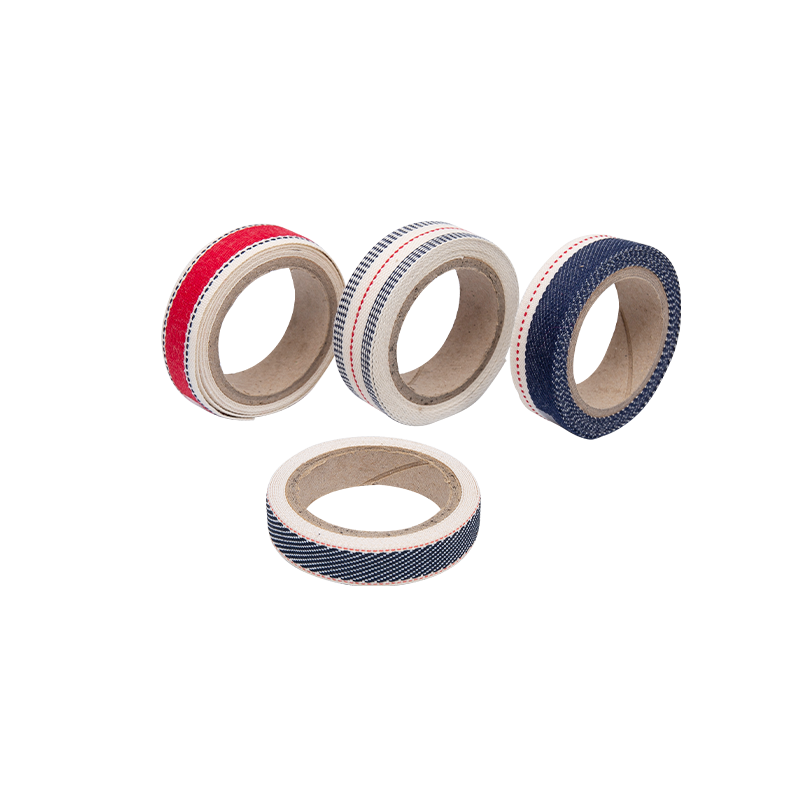
The resurgence of cotton belt webbing in industrial applications reflects material property advantages unavailable in polyester, nylon, or aramid alternatives. Cellulosic fiber structure provides unique performance characteristics for specific operational environments.
Mechanical Properties and Structural Advantages
Natural cotton fibers exhibit tensile strength of 300-700 MPa with elongation at break of 5-10%, providing adequate load-bearing capacity with inherent flexibility. The helical molecular structure of cellulose enables energy absorption through molecular rearrangement under stress, reducing shock transmission compared to high-modulus synthetics.
Comparative analysis of industrial belt materials reveals distinct performance profiles:
- Cotton fibers maintain structural integrity across relative humidity variations from 20% to 95%, unlike hygroscopic synthetics that exhibit dimensional instability
- Natural fiber surface topology provides superior grip characteristics in friction-driven conveying applications without supplementary surface treatments
- Biodegradability enables environmentally compliant disposal without specialized waste processing infrastructure
- Electrostatic discharge resistance eliminates spark hazards in explosive atmospheres without conductive fiber additives
<td+180°C
| Property | Cotton Belt Webbing | Polyester Webbing | Nylon Webbing | Performance Implication |
| Tensile strength (MPa) | 300-700 | 800-1200 | 700-1000 | Synthetics higher; cotton adequate for light-medium duty |
| Elongation at break (%) | 5-10 | 15-30 | 20-40 | Cotton provides dimensional stability; synthetics absorb shock |
| Moisture regain (%) | 7-8 | 0.4 | 4.0 | Cotton swells and releases moisture; synthetics hydrophobic |
| Static charge accumulation | Minimal | High | Moderate | Cotton safe for explosive environments without treatment |
| Biodegradability | Complete (6 months) | None (persistent) | None (persistent) | Cotton compliant with environmental regulations |
| Maximum service temperature | +150°C | +120°C | Cotton adequate for most industrial heating applications | |
| UV resistance | Poor (degrades) | Excellent | Good | Cotton requires protection from direct sunlight exposure |
| Abrasion resistance (Martindale cycles) | 15,000-25,000 | 40,000-60,000 | 50,000-80,000 | Synthetics superior for high-wear applications |
Thermal and Chemical Resistance Profiles
Cotton cellulose degrades through oxidation above 150°C, with progressive strength loss accelerating beyond this threshold. However, industrial processing temperatures rarely exceed 120°C in textile, food, and packaging applications where cotton webbing predominates.
Chemical resistance characteristics favor cotton for organic processing environments:
- Resistance to animal and vegetable oils, fats, and waxes common in food processing and leather manufacturing
- Compatibility with water-based cleaning agents and sanitizing solutions without polymer degradation
- Degradation in strong acids (pH < 2) and alkalis (pH > 12), requiring protection in chemical processing environments
- Non-reactivity with flour, sugar, starch, and organic dusts that accumulate in conveying systems
Heavy Duty Applications and Load Bearing Engineering
Power transmission and conveying systems impose tensile, flexural, and abrasive stresses requiring careful specification of belt construction. Heavy duty cotton belt webbing for conveyor systems utilizes specific weave architectures and yarn configurations to meet mechanical requirements.
Weave Architecture and Load Distribution
Solid woven construction provides maximum structural integrity for heavy-duty applications. Unlike tubular or flat woven alternatives, solid woven cotton belt webbing incorporates multiple warp and weft yarn layers interlaced to form a homogeneous load-bearing structure.
Structural comparison of webbing constructions:
| Construction Type | Thickness Range (mm) | Breaking Strength (N/cm) | Flexibility | Primary Applications |
| Plain weave (1/1) | 0.8-1.2 | 200-400 | Excellent | Light conveying, strapping, binding |
| Twill weave (2/1, 3/1) | 1.0-1.5 | 350-600 | Good | Medium duty conveying, power transmission |
| Satin weave (4/1, 5/1) | 1.2-1.8 | 400-700 | Moderate | High-speed conveying, precision positioning |
| Solid woven (multi-layer) | 2.0-5.0 | 800-2500 | Limited | Heavy duty conveying, industrial drives |
| Double-layer laminated | 3.0-6.0 | 1200-3500 | Limited | Extreme duty, mining, agriculture |
Endless Construction for Critical Applications
Mechanical joints represent the primary failure mode in belt systems, with stress concentrations reducing effective strength by 30-50% at splice points. Solid woven cotton belt webbing endless construction eliminates joints through continuous weaving or advanced splicing techniques.
Endless construction methodologies:
- Direct endless weaving on specialized looms with circular warp beam configuration
- Finger splice with interdigitated pattern and polymer adhesive bonding achieving 85-90% of base material strength
- Stepped splice with progressive overlap distributing stress across multiple yarn systems
- Heat-sealed splice utilizing thermoplastic coating activation for chemical bonding
Endless construction provides operational advantages:
- Elimination of splice-related thickness variations causing tracking instability
- Uniform load distribution preventing premature failure at weak points
- Reduced maintenance intervals extending production uptime
- Smooth surface profile preventing product marking in sensitive conveying applications
Food Industry Compliance and Safety Standards
Food processing environments impose stringent material requirements addressing chemical safety, hygiene maintenance, and contamination prevention. Cotton belt webbing for food processing must satisfy regulatory frameworks while maintaining functional performance under wet cleaning and thermal sanitization protocols.
Regulatory Compliance Frameworks
Global food safety regulations govern materials contacting food products or processing environments. Key compliance requirements include:
- EU Regulation 1935/2004 on materials and articles intended to come into contact with food
- FDA 21 CFR 177.2600 for rubber articles intended for repeated use (applicable to textile coatings)
- Regulation (EC) No 2023/2006 on good manufacturing practice for materials and articles in contact with food
Cotton belt webbing for food processing achieves compliance through:
- Natural fiber composition without synthetic polymer additives requiring migration testing
- Azo-free dyeing processes eliminating carcinogenic aromatic amine formation
- Heavy metal-free mordants in color fixation processes
Oeko-Tex Standard 100 Certification
Our 100% Oeko-Tex certification provides independent verification of chemical safety. Standard 100 testing protocol examines:
| Substance Category | Test Parameters | Product Class II Limit (Direct Skin Contact) | Certification Status |
| Illegal substances | Legally banned compounds | Not detectable | Pass |
| Regulated substances | Legally regulated by limit values | Below threshold | Pass |
| Harmful substances | Scientifically proven health hazards | Below threshold | Pass |
| Watch list substances | Suspected health hazards | Monitored | Pass |
| Azo colorants (releasing aromatic amines) | 22 regulated amines | <20 mg/kg each | Not detectable |
| Formaldehyde | Free and partially releasable | <75 mg/kg | <20 mg/kg |
| Extractable heavy metals | Antimony, arsenic, lead, cadmium, etc. | Variable by element | Below all limits |
| Pesticides | Sum of all detected substances | <0.5 mg/kg | Not detectable |
Hygiene and Cleanability Performance
Food processing belts require frequent sanitization without degradation. Cotton webbing advantages include:
- High temperature washability up to 90°C enabling thermal disinfection
- Absorbency permitting effective detergent contact with embedded soils
- Smooth surface finish preventing bacterial harborage in surface irregularities
- Biodegradability allowing disposal without hazardous waste classification
Industrial Grade Specifications and Quality Assurance
Cotton webbing belt material industrial grade must satisfy dimensional tolerances, mechanical performance standards, and consistency requirements for automated manufacturing integration.
Mechanical Testing Protocols
Standardized testing ensures specification compliance and batch-to-batch consistency:
- Breaking strength determination per ISO 13934-1 (strip method) or ASTM D5035
- Elongation measurement at specified load percentages to characterize elastic behavior
- Seam slippage resistance for joined constructions per ISO 13935-2
- Abrasion resistance via Martindale or Taber methods for wear life prediction
- Color fastness to washing (ISO 105-C06), rubbing (ISO 105-X12), and light (ISO 105-B02)
Industrial grade specification ranges:
| Parameter | Standard Grade | Heavy Duty Grade | Premium Grade | Test Method |
| Breaking strength (N/cm) | 300-500 | 600-1200 | 1500-2500 | ISO 13934-1 |
| Elongation at break (%) | 8-12 | 6-10 | 5-8 | ISO 13934-1 |
| Width tolerance (mm) | ±1.0 | ±0.5 | ±0.3 | Direct measurement |
| Thickness tolerance (mm) | ±0.2 | ±0.15 | ±0.1 | ISO 5084 |
| Abrasion resistance (cycles) | 15,000 | 25,000 | 40,000 | Martindale ISO 12947 |
| Color fastness to washing | Grade 3-4 | Grade 4 | Grade 4-5 | ISO 105-C06 |
Dimensional Stability and Pre-Shrinking
Cotton fibers exhibit hygroscopic dimensional change, with potential shrinkage of 3-8% from relaxed to wet-state and back to conditioned state. Industrial applications requiring precise positioning cannot tolerate such variability.
Pre-shrinking processing eliminates dimensional instability:
- Mechanical pre-shrinking applies controlled compression and heat to set fiber positions
- Sanforizing process reduces residual shrinkage to < 1% in subsequent wet processing
- Compactor finishing for tubular constructions stabilizes width and length simultaneously
Our pre-shrinking machine infrastructure ensures delivered webbing maintains dimensional specifications through installation and initial operation phases.
Manufacturing Capabilities and Customization Services
Industrial applications demand specific dimensional, mechanical, and surface characteristics unavailable in standard commodity products. Custom width cotton belt webbing manufacturer capabilities enable specification optimization for unique equipment requirements.
Advanced Production Infrastructure
Our manufacturing facility operates specialized narrow-fabric weaving equipment:
- Narrow-fabric needle looms (width range 10-300mm) with electronic jacquard control enabling complex pattern formation
- Jacquard woven machines with 2688-6144 hook capacity for intricate designs and functional surface textures
- Warping machines with individual end tension control ensuring uniform yarn loading and fabric structural consistency
- Pre-shrinking machines with precision temperature and compression control for dimensional stability
Customization Parameters and Technical Limits
Engineering consultation determines optimal specifications considering:
| Parameter | Standard Range | Extended Capability | Technical Constraint |
| Width (mm) | 10-150 | 5-300 | Minimum 5mm for structural integrity |
| Thickness (mm) | 0.5-3.0 | 0.3-6.0 | Maximum depends on yarn count and weave density |
| Yarn linear density (tex) | 10-50 | 5-100 | Coarse yarns affect surface smoothness |
| Ends per cm (warp density) | 20-60 | 15-80 | Maximum limited by yarn diameter and loom mechanics |
| Picks per cm (weft density) | 15-40 | 10-50 | High density reduces flexibility |
| Colors (solid) | Standard palette | Pantone matching | Dye affinity variations affect shade accuracy |
| Minimum order (meters) | 1,000 | 500 (prototype) | Setup waste amortization |
Development and Prototyping Process
New product development follows structured engineering protocol:
- Technical requirement documentation capturing load, environment, and regulatory specifications
- Yarn selection and weave design using CAD simulation for structural prediction
- Sample production (3-5 day turnaround for standard constructions)
- Laboratory testing for mechanical, physical, and chemical compliance verification
- Field trial coordination with client equipment for operational validation
- Production scaling with statistical process control implementation
Industry Applications and Implementation Engineering
Specific industrial sectors utilize cotton belt webbing for distinct functional requirements, demanding application-specific engineering.
Textile and Garment Manufacturing
Clothing production equipment employs cotton webbing for:
- Steam ironing machine conveyor belts requiring heat resistance to 150°C and moisture absorption
- Fabric inspection machine feed systems where static-free operation prevents electrostatic attraction of lint
- Cutting table positioning tapes where dimensional stability ensures pattern alignment accuracy
- Garment finishing equipment requiring gentle handling of delicate fabrics
Footwear and Leather Processing
Shoe manufacturing applications include:
- Upper forming machine belts where natural grip characteristics hold leather without slippage
- Leather sanding machine conveyor surfaces where cotton nap absorbs dust and prevents surface scratching
- Sole attaching press feed systems requiring precise positioning without marking white rubber compounds
- Finishing line conveying where chemical resistance to waxes and polishes is essential
Packaging and Printing Industries
Carton and label production utilizes cotton webbing for:
- Carton folding machine feed belts where compressibility accommodates variable thickness materials
- Label printing press conveyor systems requiring precise registration without stretching
- Corrugated board conveying where abrasion resistance handles rough paper surfaces
- Bookbinding machine tapes where flexibility accommodates tight radius bends
Procurement Engineering and Lifecycle Management
Effective specification requires analysis of operational demands, safety factors, and total cost considerations rather than unit price comparison alone.
Load Calculation and Safety Factor Selection
Belt system design requires determination of working load and appropriate safety margins:
- Working load calculation based on conveyed mass, friction coefficients, and acceleration forces
- Safety factor selection (typically 5:1 to 10:1) accounting for dynamic loading, wear, and environmental degradation
- Joint efficiency factors (85-90% for endless constructions; 50-70% for mechanical fasteners)
| Application Category | Typical Safety Factor | Justification |
| Light conveying (packaging, paper) | 5:1 | Predictable loads, clean environment, easy access for maintenance |
| Medium duty (food processing, textiles) | 7:1 | Moderate contamination, washdown requirements, continuous operation value |
| Heavy duty (leather, rubber goods) | 10:1 | High friction, abrasive environment, critical production dependence |
| Power transmission (drives, lifts) | 10:1 minimum | Personnel safety implications, dynamic shock loads, failure consequences |
Maintenance Protocols and Service Life Optimization
Preventive maintenance extends operational life and prevents catastrophic failure:
- Visual inspection intervals: Weekly for critical systems; monthly for standard conveying
- Edge wear monitoring indicating tracking misalignment requiring pulley adjustment
- Tension monitoring maintaining manufacturer-specified elongation (typically 1-2% for cotton)
Replacement criteria include:
- Breaking strength reduction to 70% of original specification
- Visible fiber fracture or surface fraying exceeding 5% of width
- Permanent elongation exceeding 3% from installed length
- Contamination imbedded to depth preventing effective cleaning
Frequently Asked Questions
How does cotton belt webbing compare to polyester in conveyor applications?
Cotton belt webbing and polyester serve distinct operational niches despite overlapping mechanical specifications. Polyester provides 2-3x higher tensile strength and superior abrasion resistance, making it preferable for heavy-load, high-speed, or abrasive material conveying. However, cotton offers critical advantages in specific environments: electrostatic discharge safety without conductive additives, superior moisture absorption for wet processing conditions, and biodegradability for environmentally regulated operations. Cotton's lower modulus provides better grip on smooth products without slippage, while its thermal properties prevent heat buildup in friction-intensive applications. Selection requires analysis of load magnitude, environmental conditions, regulatory constraints, and total lifecycle costs rather than simple strength comparison.
What is the maximum load capacity for heavy duty cotton belt webbing?
Heavy duty cotton belt webbing for conveyor systems achieves breaking strengths of 800-2500 N/cm depending on construction parameters. Solid woven multi-layer architectures with high yarn densities (60+ ends per cm) and coarse yarn counts (50+ tex) maximize load capacity. However, maximum working load must incorporate safety factors of 5:1 to 10:1 depending on application criticality, resulting in allowable working loads of 80-500 N/cm. Endless constructions maintain consistent strength across the entire belt length, while spliced belts must derate capacity at joint locations (typically 50-70% efficiency for mechanical fasteners; 85-90% for adhesive finger splices). For precise capacity determination, engineers should specify required breaking strength based on peak dynamic loads including starting acceleration, emergency stopping, and potential product accumulation, then apply appropriate safety margins.
Is solid woven cotton belt webbing endless suitable for food contact applications?
Solid woven cotton belt webbing endless construction is highly suitable for food contact when manufactured with appropriate materials and processes. The endless construction eliminates mechanical fasteners (staples, rivets, hooks) that could detach into food products and harbor bacteria in crevices. Food-grade suitability requires: 100% cotton fiber without recycled content that might introduce contaminants; Oeko-Tex Standard 100 certification verifying absence of azo dyes, formaldehyde, heavy metals, and pesticide residues; and manufacturing in facilities maintaining HACCP protocols. Our 100% Oeko-Tex certified production ensures compliance with EU Regulation 1935/2004 and FDA indirect food contact requirements. The smooth, continuous surface of endless construction facilitates cleaning and sanitization protocols required in food processing environments, while cotton's absorbency enables effective detergent contact for soil removal.
What customization options are available from a custom width cotton belt webbing manufacturer?
Custom width cotton belt webbing manufacturer capabilities extend across dimensional, structural, and surface parameters. Width customization ranges from 5mm minimum (limited by structural integrity) to 300mm maximum, with tolerances of ±0.3mm for precision applications. Thickness engineering achieves 0.3-6.0mm through yarn count selection, weave density, and multi-layer lamination. Structural customization includes weave pattern (plain, twill, satin, or complex Jacquard designs), yarn linear density (5-100 tex), and warp/weft density ratios optimizing strength in specific directions. Surface treatments encompass singeing for smoothness, napping for grip, and coating with food-grade polymers for chemical resistance. Color matching to Pantone specifications enables corporate identification or coding systems. Development timelines typically span 3-5 days for sampling following technical specification agreement, with production scaling contingent on order volume and complexity. Minimum order quantities start at 500 meters for prototype quantities, reducing to competitive levels for established specifications.
How does Oeko-Tex certification benefit industrial buyers of cotton belt webbing?
Oeko-Tex Standard 100 certification provides industrial buyers with independent verification of chemical safety essential for regulatory compliance and market access. For cotton belt webbing for food processing, certification demonstrates compliance with EU Regulation 1935/2004 on food contact materials and supports FDA regulatory submissions for US market access. The certification process tests for over 100 harmful substances including legally banned compounds, regulated substances with limit values, and scientifically established health hazards. Our 100% Oeko-Tex certification ensures: absence of carcinogenic aromatic amines from azo dyes (22 regulated compounds); formaldehyde levels below 20 mg/kg (significantly stricter than regulatory limits); and non-detectable levels of extractable heavy metals and pesticide residues. For industrial buyers, certification reduces regulatory risk, accelerates product approval processes in sensitive applications (food, childcare, healthcare), and supports corporate sustainability commitments. The certification requires annual renewal with random product testing, ensuring ongoing compliance rather than single-point verification.
Conclusion
Specification of cotton belt webbing for industrial applications requires systematic analysis of mechanical requirements, environmental conditions, regulatory constraints, and lifecycle economics. The five specialized variants examined—heavy duty cotton belt webbing for conveyor systems, solid woven cotton belt webbing endless, cotton belt webbing for food processing, cotton webbing belt material industrial grade, and custom width cotton belt webbing manufacturer capabilities—address distinct operational demands across textile, food, footwear, and packaging industries.
Technical partnership with vertically integrated manufacturers possessing advanced weaving technology, in-house testing laboratories, and comprehensive certification portfolios ensures specification optimization and supply security. Jiangyin Baihong Weaving Band Co., Ltd. provides engineering consultation, rapid prototyping, and scalable production to support industrial clients in achieving operational efficiency and regulatory compliance objectives.
References
- ISO 13934-1:2013, Textiles — Tensile properties of fabrics — Part 1: Determination of maximum force and elongation at maximum force using the strip method
- ISO 13935-2:2014, Textiles — Seam tensile properties of fabrics and made-up textile articles — Part 2: Determination of maximum force to seam rupture using the grab method
- ISO 12947-2:2016, Textiles — Determination of the abrasion resistance of fabrics by the Martindale method — Part 2: Determination of specimen breakdown
- ISO 105-C06:2010, Textiles — Tests for colour fastness — Part C06: Colour fastness to domestic and commercial laundering
- Oeko-Tex Standard 100:2024, Testing, Certification and Licensing of Textiles and Accessory Materials
- EU Regulation 1935/2004 on materials and articles intended to come into contact with food
- FDA 21 CFR 177.2600, Rubber articles intended for repeated use
- ASTM D5035-11(2019), Standard Test Method for Breaking Force and Elongation of Textile Fabrics (Strip Method)
- ASTM D3884-09(2017), Standard Guide for Abrasion Resistance of Textile Fabrics (Rotary Platform, Double-Head Method)
- Booth, J.E. (1968). Principles of Textile Testing: An Introduction to Physical Methods of Testing Textile Fibres, Yarns and Fabrics. Newnes-Butterworths
- Gohl, E.P.G. & Vilensky, L.D. (1983). Textile Science: An Explanation of Fibre Properties. Longman Cheshire
- Hearle, J.W.S. (2001). High-performance Fibres. Woodhead Publishing
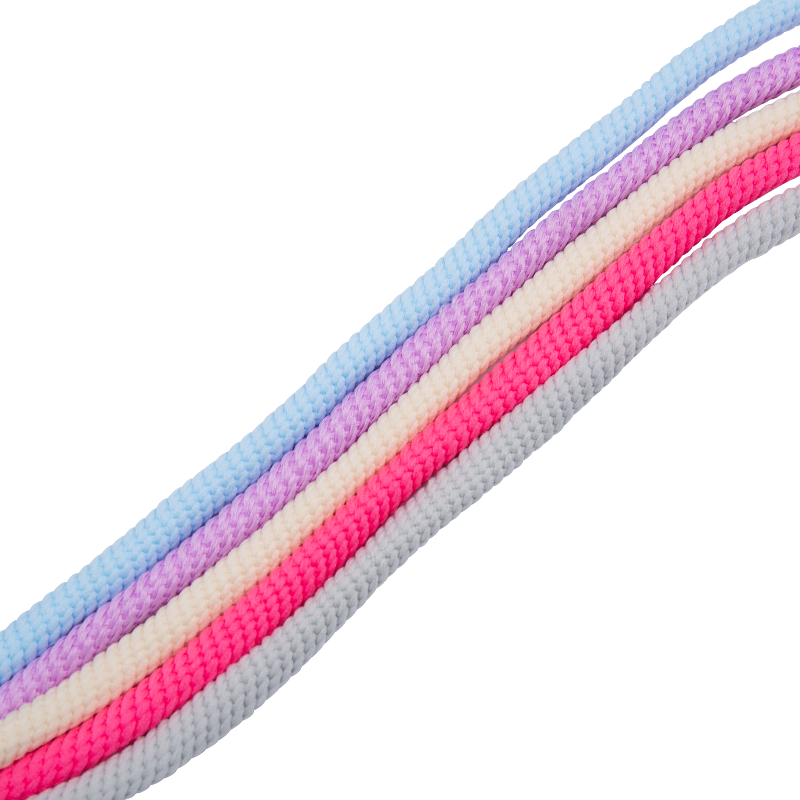
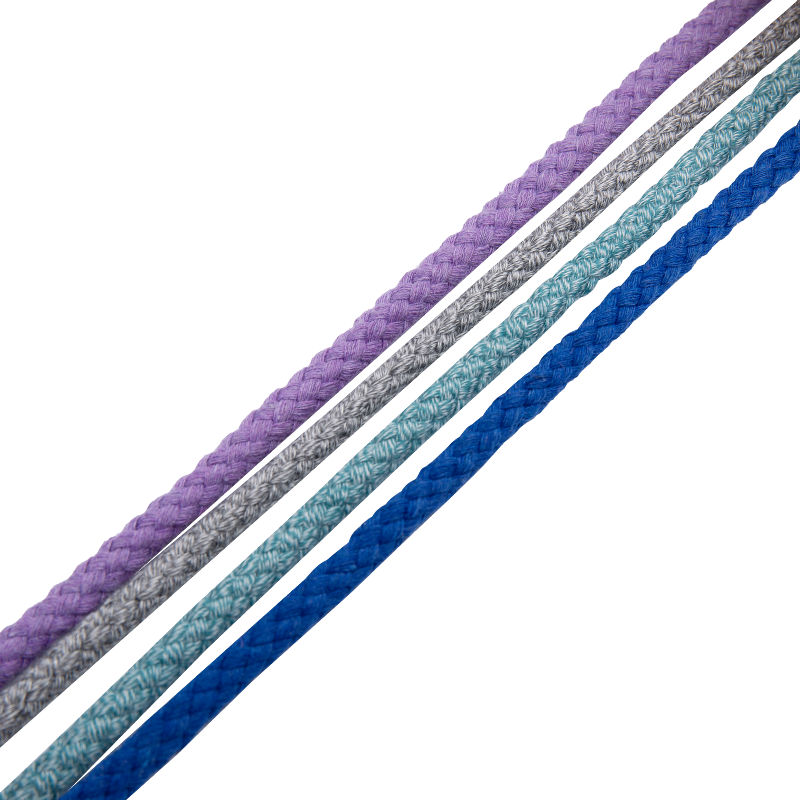
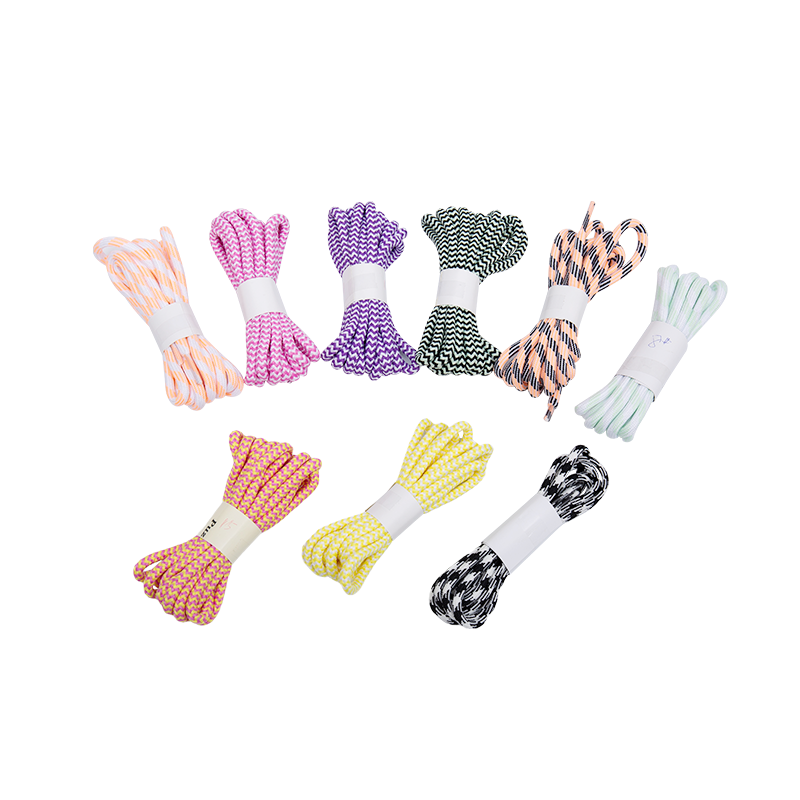

Over the years, we have been providing high-quality, safe and reliable products for the clothing and footwear industries.
- Quick Links
- Contact Information
-
-
 NO.137-1 Chenglu Road, Huashi Town, Jiangyin City214421, Jiangsu, China
 -
 +86 138-0616-9220
 -
 Lhbhzd@126.com
bh@jyribbon.com
sales2@jyribbon.com
-
- Mobile QR Code

