


 English
  русский
  Español
Industry News
Apr 23,2026
Why Do Cream Flat Laces Become the Soul of Vintage Sneakers in 2026?
Content
The retro trend has made a strong comeback in 2026, and vintage sneakers have become a staple in the footwear market. Many B2B buyers and wholesalers have noticed that cream flat laces are gradually becoming the core accessory that enhances the vintage feel of these sneakers. These laces are not just functional fasteners; they are key elements that restore the classic look of vintage styles and meet the market’s demand for retro aesthetics. This article explores the technical characteristics, market value, and application details of cream flat laces from an engineering perspective, providing practical references for B2B procurement and wholesale.
The Retro Trend in 2026: Why Vintage Sneakers Are Booming
2026 has seen a significant shift in the sneaker market, with chunky sneakers gradually giving way to slim, retro models. Fashion insiders and market analysts point out that consumers now pursue more understated, elegant, and personalized styles, and vintage sneakers perfectly fit this demand. These sneakers often retain classic silhouettes and details from past decades, and their overall look relies heavily on matching accessories. Cream flat laces for vintage sneakers have become a popular choice because they can seamlessly integrate with the retro design of the shoes, enhancing their nostalgic charm without being overly exaggerated.
For B2B buyers and wholesalers, understanding the connection between vintage sneakers and cream flat laces is crucial. The rising demand for vintage sneakers directly drives the growth of the cream flat laces market, making them a high-potential product category in the accessory supply chain.
Technical Analysis of Cream Flat Laces: From Material to Production
Core Material Selection for Cream Flat Laces
Cream flat laces are mainly made of polyester, a material chosen for its excellent performance and cost-effectiveness. Polyester fibers have good wear resistance, tensile strength, and anti-aging properties, which ensure the laces can withstand frequent tying and untying without fraying easily. Compared with cotton laces, polyester-based cream flat laces have better water resistance and color fastness, maintaining their cream hue even after multiple washes—a key advantage for B2B buyers focusing on product durability.
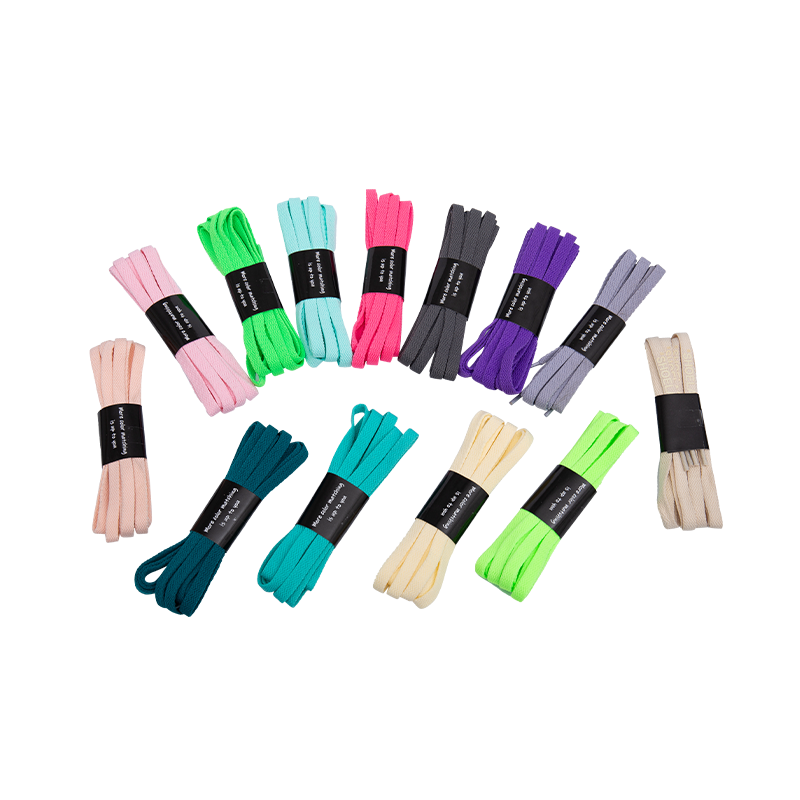
Some high-end cream flat laces also adopt a blend of polyester and cotton, combining the softness of cotton with the durability of polyester. This material combination improves the comfort of the laces while ensuring their service life, meeting the diverse needs of different vintage sneaker brands.
Production Process and Quality Control
The production of cream flat laces involves multiple strict engineering processes to ensure consistency and quality. The main steps include raw material preparation, yarn weaving, heat setting, dyeing, and inspection. In the yarn weaving stage, advanced flat weaving equipment is used to ensure the laces have a smooth surface and uniform width, which is essential for their flat appearance. The heat-setting process stabilizes the shape of the laces, preventing them from shrinking or deforming after washing.
Quality control is a key link for B2B procurement. Reputable manufacturers conduct strict inspections on raw materials, production processes, and finished products. Raw materials are tested for fiber uniformity and color fastness; the weaving process is monitored to avoid loose threads or uneven thickness; and finished laces are checked for appearance, size, and tensile strength to ensure they meet industry standards.
Comparison of Cream Flat Laces with Other Lace Types
To help B2B buyers make more informed procurement decisions, this section compares cream flat laces with other common lace types, focusing on their performance, application scenarios, and suitability for vintage sneakers. The following table details the key differences:
| Lace Type | Material Characteristics | Advantages | Limitations | Suitability for Vintage Sneakers |
| cream flat laces | Polyester or polyester-cotton blend, flat cross-section | Secure grip, not easy to loosen; good color fastness; smooth appearance fits retro style | May develop creases over time | High (matches the classic, understated look of vintage sneakers) |
| Round Laces | Nylon or cotton, cylindrical shape | Smooth glide through eyelets; elegant appearance | Easy to loosen; limited color variety | Low (too sleek, lacks retro texture) |
| Braided Laces | Interwoven yarns, textured surface | High strength; good grip | Bulky; may not fit narrow eyelets | Medium (too textured, may overpower vintage sneaker design) |
Key Considerations for B2B Procurement of Cream Flat Laces
1. Specification Matching
B2B buyers need to pay attention to the specifications of cream flat laces to ensure they match the vintage sneakers they supply. The width of the laces typically ranges from 8mm to 15mm, with 10mm being the most common size for vintage sneakers. The length should be adjusted according to the number of eyelets on the sneakers—common lengths include 80cm, 100cm, and 120cm. Custom length cream flat laces are also available for buyers with specific needs, allowing them to tailor the laces to different sneaker models.
2. Color Consistency
The cream color of the flat laces needs to be consistent with the overall color scheme of vintage sneakers. B2B buyers should request color samples from manufacturers to ensure the laces’ hue matches the sneakers’ retro tone. High-quality cream flat laces use high-grade dyes that prevent fading, ensuring the laces maintain their original color even after long-term use and multiple washes.
3. Cost-Effectiveness and MOQ
For wholesalers, cost-effectiveness is a key factor. Wholesale cream flat laces usually have a minimum order quantity (MOQ) ranging from 50 to 500 pairs, depending on the manufacturer and specifications. Buyers should compare quotes from multiple manufacturers, considering factors such as material quality, production craftsmanship, and delivery time, to find the most cost-effective option.
4. Compliance with Industry Standards
Cream flat laces for sneakers must comply with relevant industry standards, such as safety standards for textile products. B2B buyers should verify that manufacturers have passed quality certifications and that the laces are free from harmful substances, ensuring the products meet the requirements of global markets.
FAQ About Cream Flat Laces
- Q: What is the best material for cream flat laces used in vintage sneakers? A: Polyester is the most recommended material. It has excellent wear resistance, color fastness, and anti-aging properties, which are suitable for the frequent use of sneakers. Polyester-cotton blends are also a good choice for buyers who prioritize softness.
- Q: Can I customize the width and length of cream flat laces? A: Yes, most manufacturers offer custom-length cream flat laces and custom-width options. Buyers can provide specific specifications according to their sneaker models, and manufacturers will adjust the production process accordingly.
- Q: How to ensure the color of the cream flat laces does not fade? A: Buyers should choose manufacturers that use high-grade, environmentally friendly dyes. Additionally, they can request color fastness test reports from manufacturers to verify that the laces can withstand multiple washes without fading.
References
- 1. Original Power Document. (2025). Shoelace Production Engineering Plan. Retrieved from https://www.book118.com/html/2025/0219/5143230104012102.shtm
- 2. Meyer, E. (2026, February 23). Stylisten verraten die Sneaker-Trends 2026: Die neuen Favoriten. DEAVITA. Retrieved from https://deavita.com/trends/sneaker-trends-2026-die-neuen-favoriten-1921694.html
- 3. Alibaba.com. (2026, January 19). Understanding Broad Laces: Composition, Standards, and Applications. Retrieved from https://www.alibaba.com/product-insights/broad-laces.html
- 4. Alibaba.com. (2025, May 21). Cream Colored Shoe Laces. Retrieved from https://www.alibaba.com/showroom/cream-colored-shoe-laces.html
- 5. Shoelaces Express. (2024, March 14). Fashion Athletic Flat Laces Custom Length with Tip - Vanilla Cream. Retrieved from https://shoelacesexpress.com/products/fashion-athletic-flat-vanilla-cream-custom
- 6. Unknown. (2025, November 29). Shoelaces. Retrieved from http://www.shturl.cc/fba00bfb58d71d583499eb67e968eaa6


Over the years, we have been providing high-quality, safe and reliable products for the clothing and footwear industries.
- Quick Links
- Contact Information
-
-
 NO.137-1 Chenglu Road, Huashi Town, Jiangyin City214421, Jiangsu, China
 -
 +86 138-0616-9220
 -
 Lhbhzd@126.com
bh@jyribbon.com
sales2@jyribbon.com
-
- Mobile QR Code

