


 English
  русский
  Español
Home / News / Industry News / Elastic vs Non-Elastic Webbing: How Stretch Capacity Affects Product Performance

Industry News
Sep 21,2026
Elastic vs Non-Elastic Webbing: How Stretch Capacity Affects Product Performance
Content
- 1 What Stretch Capacity Actually Measures
- 2 Elastic vs Non-Elastic Webbing: A Performance Comparison
- 3 How Stretch Capacity Affects Footwear Performance
- 4 Apparel: How Elastic vs Non-Elastic Webbing Changes Fit and Comfort
- 5 Outdoor Gear: Why Stretch Capacity Determines Load Management
- 6 Choosing Between Elastic vs Non-Elastic Webbing: A Practical Framework
- 7 FAQ: Stretch Capacity in Webbing
During a recent production run at Jiangyin City Baihong Weaving Band Co., Ltd., a footwear factory rejected an entire batch of elastic webbing because it stretched 22% more than the specification sheet allowed. The webbing was not faulty. The design simply called for a non-elastic polyester tape in a heel counter, and the two materials behaved very differently under load. That difference, defined by stretch capacity, determines how a waistband fits, how a heel stays locked, and whether a backpack compression strap actually holds.
What Stretch Capacity Actually Measures
Stretch capacity is the maximum extension a webbing can tolerate before it permanently deforms, measured as a percentage of its original length.
Stretch capacity, also called elongation at break or elastic recovery, is the percentage of a webbing's original length it gains under load before either recovering or failing.
Elastic webbing uses rubber or spandex yarns twisted with cotton, polyester, or nylon. Non-elastic webbing relies on high-modulus fibers to carry the load. The three numbers a buyer should care about are stretch percent, recovery percent, and modulus, which is the force required to stretch the web. A 25mm woven elastic band typically stretches 40 to 80 percent and recovers 95 percent or more after release. A 25mm polyester webbing stretches less than 5 percent and recovers almost none. In Baihong's test lab, recovery is measured after 200 extension cycles, because a web that recovers on the first pull but loses 10 percent by cycle 200 will not hold a waistband or a shoe collar for long. A spec sheet that lists only a single stretch number is incomplete; it must also state the load at which that stretch was measured.
Elastic vs Non-Elastic Webbing: A Performance Comparison
Elastic webbing always wins when a product must return to shape; non-elastic webbing always wins when dimensional stability matters more than comfort.
Elastic Webbing
- 40 to 80 percent stretch
- Recovery of 90 percent or more
- Soft hand feel
- Used in waistbands, cuffs, and shoe elastics
Non-Elastic Webbing
- 0 to 5 percent stretch
- Near-zero recovery
- Firm and rigid structure
- Used in straps, belts, and reinforced panels
| Property | Elastic webbing | Non-elastic webbing | Best for |
| Stretch before break | 40-80% | 0-5% | Fit and movement |
| Recovery after release | 90%+ | Near 0% | Consistent shape |
| Tensile strength | 250-400 N | 700-1000 N | Load bearing |
| Hand feel | Soft and pliable | Firm and structured | Skin contact |
| Cost per meter | Higher due to rubber yarn | Lower, mostly fiber | Budget-sensitive specs |
Stretch Capacity and Strength Performance
Elastic webbing Non-elastic webbing
Stretch Recovery (%)
Dimensional Stability (%)
Tensile Strength (N)
Typical production values for 25mm webbing, scaled to a 1000 N reference
How Stretch Capacity Affects Footwear Performance
In footwear, elastic webbing controls the fit of the upper around the foot, while non-elastic webbing controls the stability of the sole and the lacing system.
Elastic shoe webbing is used in tongue support, stretch laces, and ankle collars, adapting to foot movement and preventing heel slip. Non-elastic webbing is used in structural straps and heel counters, where 2 percent stretch is already too much. A heel counter that stretches 8 percent under lateral force changes the whole fit of the shoe.
40%stretch capacity for elastic shoe webbing
95%recovery after 200 flex cycles
850 Nnon-elastic structural webbing strength
+30%perceived comfort with elastic upper webbing
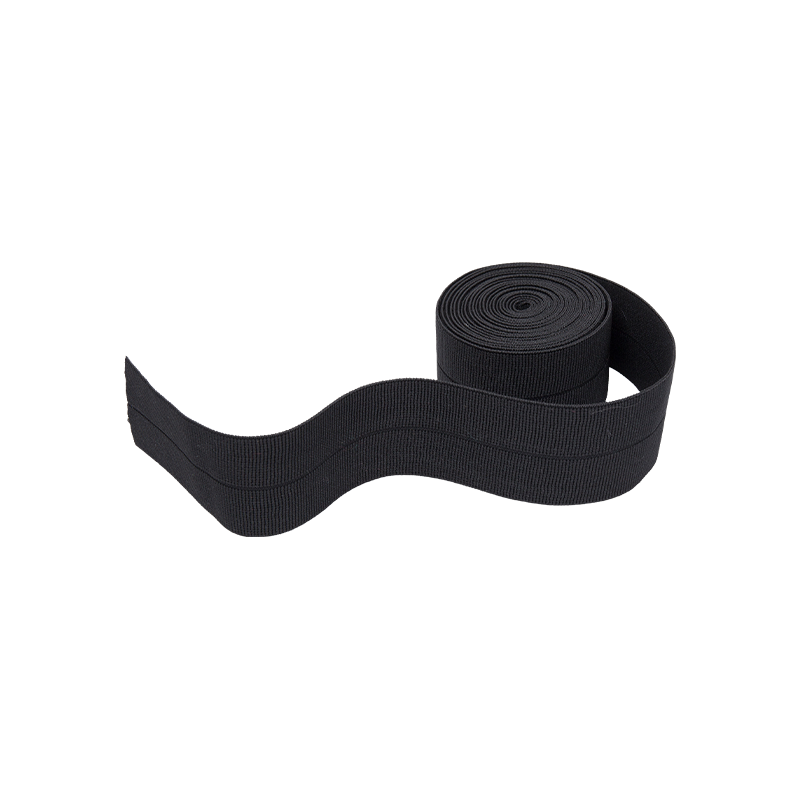 Elastic Webbing for Shoe Uppers and ConstructionThis polyester webbing offers stretch and recovery for shoe uppers, straps, and fastenings. Widths from 1cm to 20cm with various finishes support design flexibility, while its wear resistance ensures lasting fit and durability in footwear production.View Product →
When you look at how an innovative elastic webbing design accurately fits the foot, the data shows why 30 to 50 percent stretch is the sweet spot for upper panels.
A shoe that cannot breathe with your foot will always feel tight, no matter how wide the last is.
Apparel: How Elastic vs Non-Elastic Webbing Changes Fit and Comfort
Apparel is the largest category for elastic webbing because garments need to move with the body and recover to a consistent shape over hundreds of wears.
Waistbands, cuffs, and bindings depend on elastic webbing to apply gentle pressure and return to the same length after each wear. Non-elastic webbing in apparel is reserved for decorative trims, structural belts, and suspenders. A waistband that loses 6 percent recovery after 100 washes shifts from fitting comfortably to riding down.
- Waistband: 20 to 30 percent stretch with high recovery
- Cuff and binding: 40 to 60 percent stretch with soft modulus
- Decorative trim: 0 to 2 percent stretch with stable width
- Belt and suspender: 0 to 5 percent stretch with high tensile strength
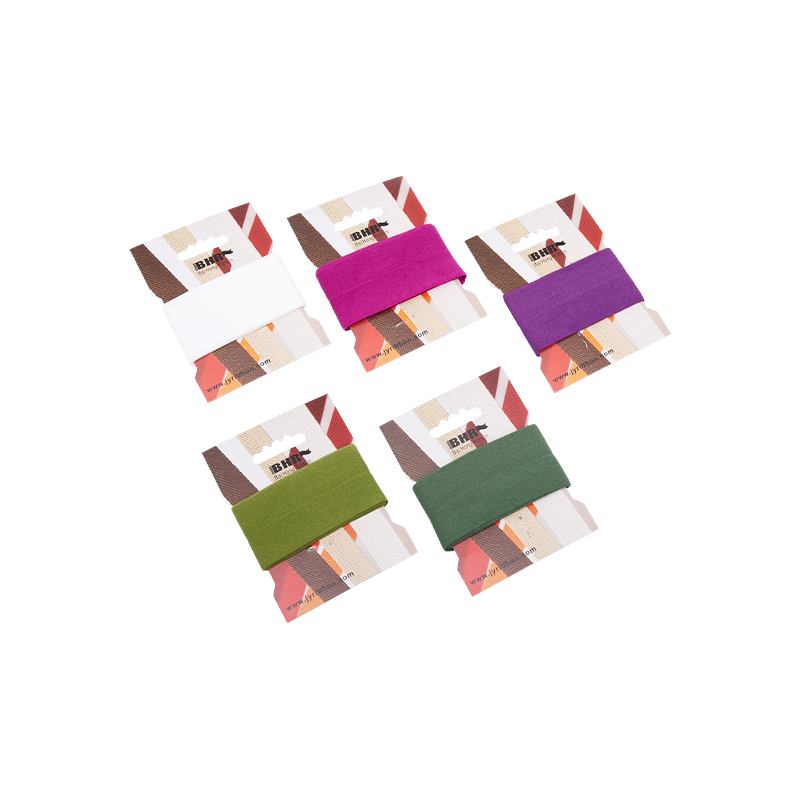 Spandex Elastic Binding for Garment EdgesThis spandex binding provides controlled stretch and recovery for waistbands, sleeves, and hemlines. Its breathable construction reduces moisture buildup, and multiple color options allow functional or contrasting trim to enhance both fit and appearance.View Product →
If the waistband stretches more than the body, the garment fits the webbing, not the person.
Outdoor Gear: Why Stretch Capacity Determines Load Management
Outdoor gear uses non-elastic webbing for load-bearing straps and elastic webbing for lashing, compression, and adaptive fit.
Backpack shoulder straps, tent guy lines, and climbing harness components need dimensional stability; a 5 percent elongation can compromise load distribution. Elastic webbing in compression panels and bungee lashing systems allows the load to shift under shock, protecting the structure. In a tent, a guy line that stretches 3 percent under wind load lets the tent flex, while a non-elastic line holds the peak solid.
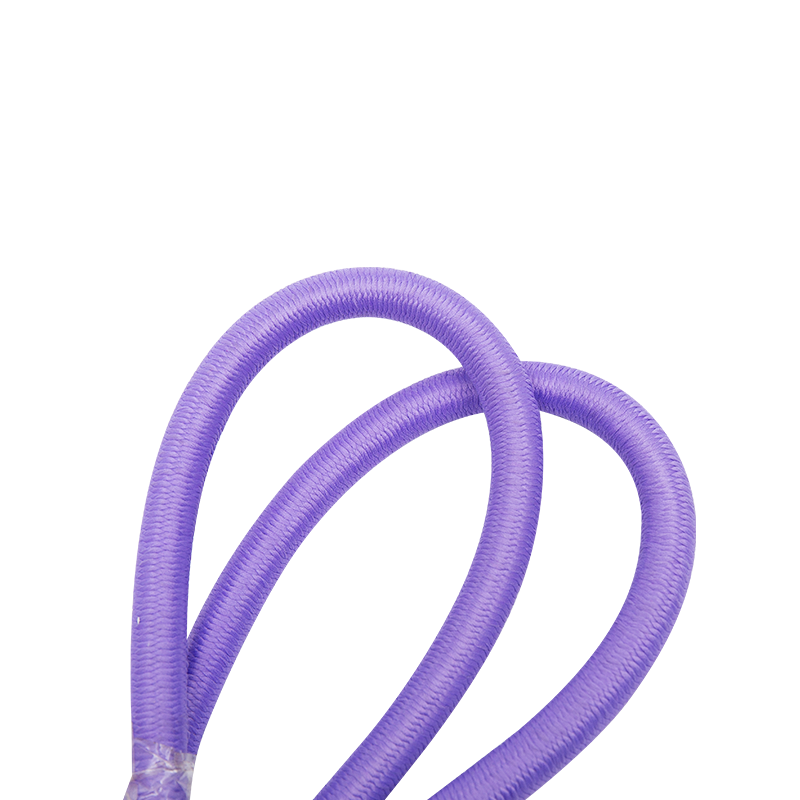 Wear-Resistant Elastic Band for Outdoor GearThis elastic band withstands repeated stretching and abrasion in outdoor settings. It is suitable for securing equipment, tent assembly, and recreational gear, maintaining consistent holding force despite temperature and humidity changes.View Product →
The engineering choices behind weaving elastic webbing for outdoor gear highlight how a controlled stretch range protects both the gear and the user.
When a compression strap stretches 30 percent, the load redistributes. That can be by design or by defect.
Choosing Between Elastic vs Non-Elastic Webbing: A Practical Framework
Choose webbing by defining the failure condition first: if the web must return to its original length, choose elastic; if it must not yield, choose non-elastic.
- Define the load path — tensile, shear, or flex.
- Set the stretch tolerance as a number, not a feeling.
- Test recovery over 200 cycles at the actual load.
- Match yarn to environmental exposure — UV, moisture, abrasion.
| Application | Recommended web type | Stretch tolerance | Material |
| Footwear upper | Elastic | 30-50% | Polyester and rubber |
| Heel counter | Non-elastic | 0-2% | Nylon |
| Waistband | Elastic | 20-30% | Cotton and spandex |
| Backpack strap | Non-elastic | 0-3% | Polyester |
| Compression lash | Elastic | 40-70% | Polyester and rubber |
Before ordering, ask for the recovery percentage after 200 cycles, not just the initial stretch, because that number predicts how the finish will hold up.
Specify stretch tolerance in writing. A 5 percent difference in modulus changes the entire fit of a waistband.
FAQ: Stretch Capacity in Webbing
How much stretch should an elastic webbing have?
For waistbands, 20 to 30 percent is typical; for cuffs and binding, 40 to 60 percent; and for shoe elastics, 30 to 50 percent. Always specify the minimum recovery as well, because a web that stretches without returning has no value.
Can non-elastic webbing be used in place of elastic?
Only if the design does not require the component to return to shape. Straps, buttons, and heel counters can run on non-elastic webbing. Waistbands and collars will feel rigid and lose fit over time.
What is the difference between woven and knitted elastic webbing?
Woven elastic webbing has a flat, firm structure and high recovery, making it the right choice for shoe uppers and waistbands. Knitted elastic webbing is softer and breathable, which is why it works well in skin-contact apparel and sports garments.
How do I test stretch capacity before ordering?
Cut a 200mm sample, mark a 100mm gauge, load it to the specified force, measure the extension, release, and measure recovery after two minutes. Repeat 200 cycles for a reliable number.
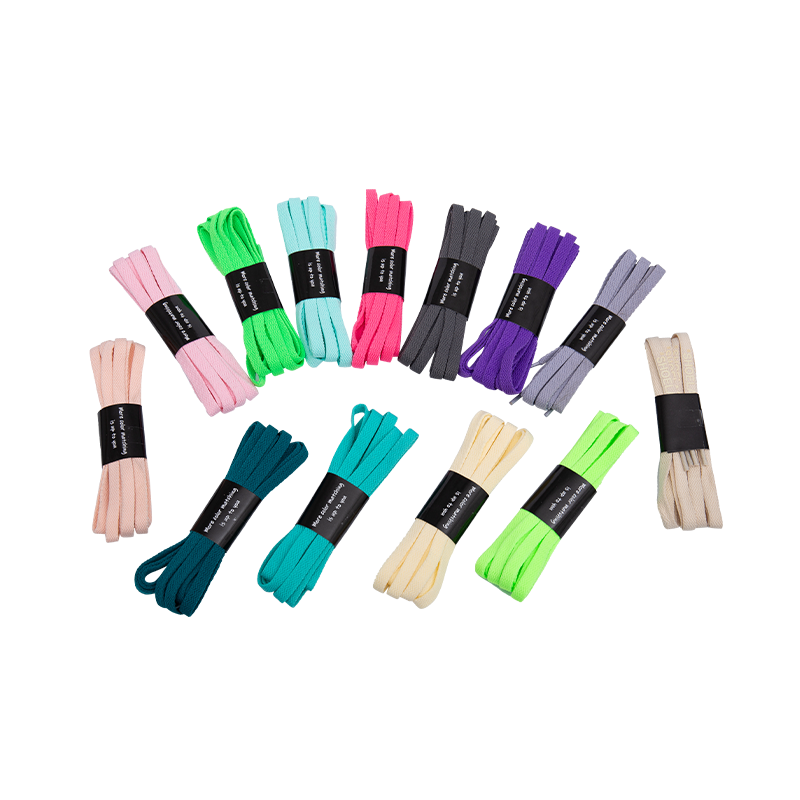

Over the years, we have been providing high-quality, safe and reliable products for the clothing and footwear industries.
- Quick Links
- Contact Information
-
-
 NO.137-1 Chenglu Road, Huashi Town, Jiangyin City214421, Jiangsu, China
 -
 +86 138-0616-9220
 -
 Lhbhzd@126.com
bh@jyribbon.com
sales2@jyribbon.com
-
- Mobile QR Code

