


 English
  русский
  Español
News
Sep 14,2026
Polyester vs Cotton Webbing: When Outdoor Durability Should Take Priority
Content
- 1 Polyester vs Cotton Webbing: The Core Performance Difference
- 2 When Outdoor Durability Should Trump Softness and Breathability
- 3 Where Cotton Still Wins: In-Skin Contact and Comfort-Driven Products
- 4 Test Data and Benchmarks: Polyester vs Cotton Webbing Metrics
- 5 Procurement Checklist: Choosing Webbing for Outdoor and Mixed-Use Products
- 6 FAQ
- 6.1 How can I quickly identify a polyester webbing sample versus a cotton webbing sample?
- 6.2 Will polyester webbing feel uncomfortable against bare skin?
- 6.3 Can polyester webbing be matched to cotton webbing in a brand color system?
- 6.4 What is the typical minimum order quantity for custom-width webbing?
The prototype backpack is strapped to a flex-test rig in our production lab in Jiangyin. After 200 cycles under an 8 N load, a 25 mm cotton webbing strap has lost 12% of its breaking strength; the same-width polyester webbing has lost 3%. This gap is the engineering reality behind a polyester vs cotton webbing decision, and it is why outdoor durability should usually take priority over softness and breathability.
Polyester vs Cotton Webbing: The Core Performance Difference
Fiber chemistry sets the performance envelope. Polyester webbing is a PET filament-based tape with high tensile strength and low moisture regain; cotton webbing is a natural cellulosic tape with a soft hand and high moisture absorption.
Polyester webbing starts as extruded polyethylene terephthalate filaments. Its moisture regain is 0.2-0.4%, so the tape does not absorb water, swell, shrink, or feed mildew in humid climates. Cotton webbing naturally reaches 8-9% moisture regain, which keeps it breathable but also drops its tensile strength by 20-30% when saturated.
| Performance Attribute | Cotton Webbing | Polyester Webbing |
| Breaking strength (dry, typical) | 250-500 N | 700-900 N |
| Moisture regain | 8-9% | 0.2-0.4% |
| Martindale abrasion | 6,000-10,000 cycles | 20,000-35,000 cycles |
| UV strength loss after 500 h | 25-35% | 5-10% |
| Elongation at break | 8-15% | 15-30% |
| Hand feel | Soft, natural | Firm, slightly slick |
Definition in procurement: durability means abrasion resistance, wet strength retention, UV stability, and flex fatigue combined. A strap that frays at a buckle after eight months has failed the durability test even if its tensile strength is still high.
2.5-3x Abrasion cycles Polyester vs cotton
3-5x Wet strength Retention advantage
0.4% Polyester moisture vs 8-9% for cotton
When Outdoor Durability Should Trump Softness and Breathability
Outdoor durability takes priority whenever a strap failure could cause injury, equipment loss, or a product return. In outdoor gear, webbing does three jobs: it carries load, it survives contact with hard edges, and it follows the body through repeated articulation.
Load-bearing and buckle-zone applications
A shoulder strap on a 45 L trekking bag carries 12-18 kg at the trailhead and more after water refill. The tape runs through a ladder lock, where the edge is cut by the hardware corner during tension. In our lab, plain polyester webbing survived 40 pull-release cycles at 8 N with no visible edge wear; the cotton equivalent started fraying at cycle 18.
Outdoor furniture and long-term UV exposure
Garden chairs, awnings, and camping stretchers use webbing under direct sunlight for years. Polyester loses 5-10% of its strength after 500 hours of UV exposure; cotton loses 25-35%. On a chair that stays outside for three summers, that difference means the strap keeps its tautness instead of snapping at the rivet.
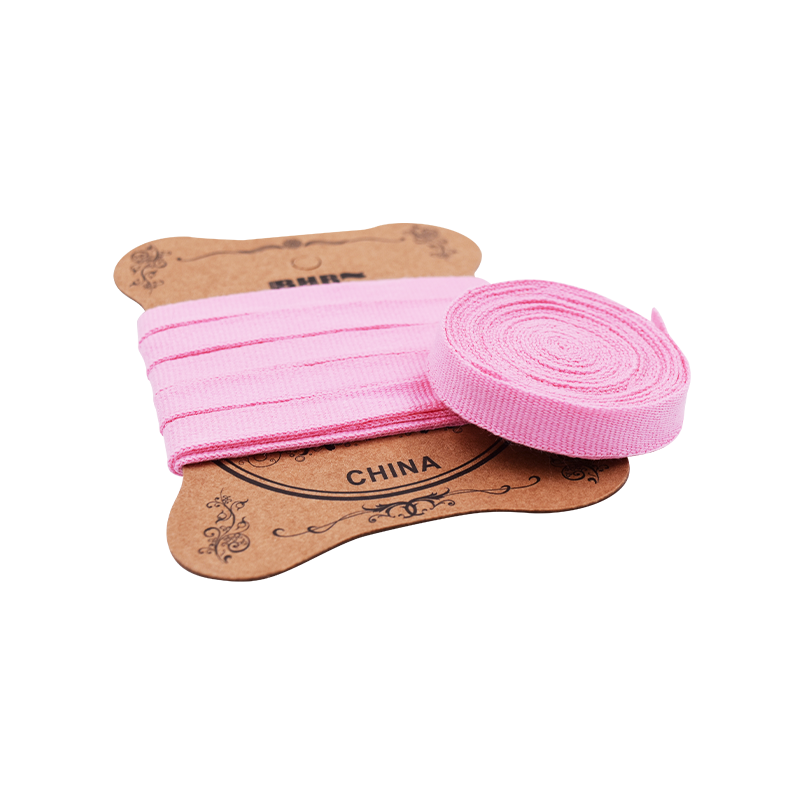 Plain Flat Polyester Webbing for UV-Resistant Outdoor UseThis smooth, flat polyester webbing resists UV degradation and maintains tension in outdoor furniture, awnings, and stretchers exposed to direct sunlight for years.View Product →
Our plain flat polyester webbing is the construction we recommend for these load paths. See how polyester webbing helps the backpack industry improve comfort and durability in a full application review.
Caution: a cotton strap on an outdoor load path does not fail as a single dramatic tear. It frays at the buckle, loses strength after humid storage, and then breaks at an unpredictable moment. For a product liability review, that behavior is harder to defend than an immediate visible defect.
Where Cotton Still Wins: In-Skin Contact and Comfort-Driven Products
Cotton webbing is the correct spec when the tape touches skin directly, sits in a high-heat environment, or carries a decorative function.
Polyester wins
- Dimensional stability in humidity
- High abrasion and flex endurance
- Cleaner cut edges at low cost
Cotton wins
- Soft hand and natural draping
- Higher breathability and moisture transport
- Better reactive-dye color depth
Apparel and accessory applications
Garment belts, waist tape, hat bands, decorative loops, and children's clothing are natural cotton territory. The tape folds, presses, and prints cleanly. In a waistband, cotton webbing survives more than 50 home laundry cycles without losing shape, whereas polyester tape can develop a wavy edge after repeated tumble drying.
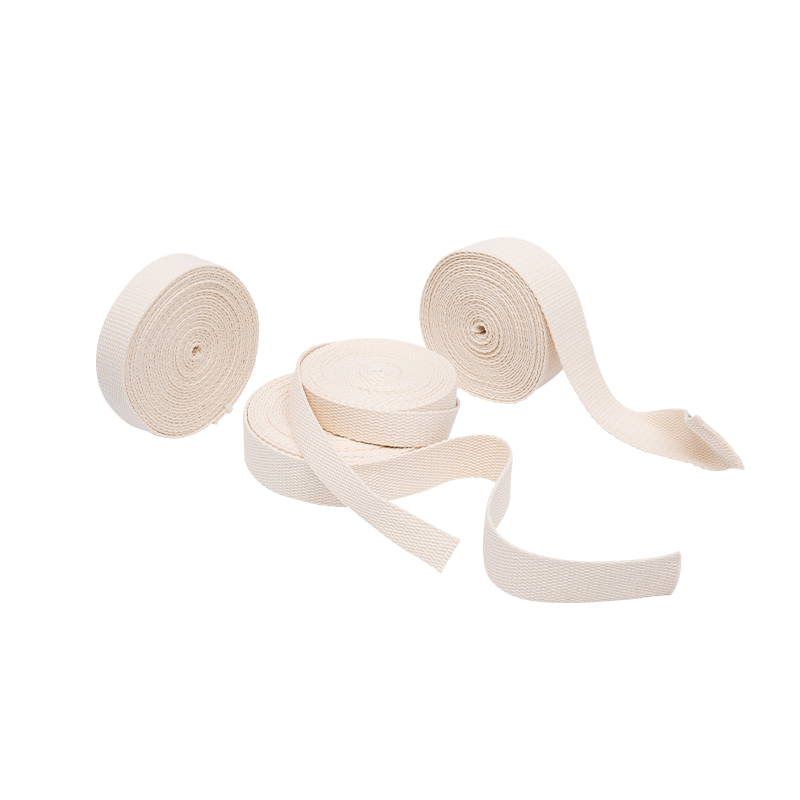 Plain Flat Cotton Webbing for Garment and Decorative UseSoft and comfortable cotton webbing in fine, coarse, or sparse weaves, ideal for belts, waistbands, hat bands, and decorative loops that withstand repeated laundry cycles.View Product →
Comfort-first spec: if the end user's only contact with the tape is a soft waist-belt or a hatband, cotton webbing turns the tape into a selling point. The tensile strength argument is irrelevant at 2 N of real-world load.
Test Data and Benchmarks: Polyester vs Cotton Webbing Metrics
Three measurable laboratory metrics draw the clearest line between the materials: breaking strength, abrasion resistance, and wet strength retention.
A 25 mm plain polyester webbing in our production range reaches 700-900 N dry breaking strength. The same-width cotton webbing lands at 250-500 N. When a 20 kg load-bearing strap needs a safety factor of five, that difference changes the required width from 25 mm polyester to 50 mm cotton. Abrasion resistance runs parallel: polyester withstands 20,000-35,000 Martindale cycles before breaking, cotton fails at 6,000-10,000.
Wet strength retention is the third metric. Cotton loses 20-30% of its breaking strength when saturated; polyester loses 5-10%. In a humid market, a saturated cotton strap loaded by a backpack with a water bottle is a failure waiting to happen. These three measurements show why outdoor durability should usually take priority.
Rule of thumb: use polyester for any strap that carries weight, passes through hardware, or faces sunlight. Use cotton for straps that only touch skin.
Procurement Checklist: Choosing Webbing for Outdoor and Mixed-Use Products
A five-step selection protocol resolves the cotton-vs-polyester question before you pay for samples.
- Map the load path. Determine how the strap is anchored, whether it passes through a buckle, and how much force reaches it in use.
- Identify the most likely failure mode. Edge fray, buckle-zone abrasion, UV embrittlement, or mildew-driven strength loss.
- Test with the actual hardware. A webbing that passes a flat pull-test often fails at a real D-ring because the corner radius concentrates pressure.
- Set the exposure threshold. Decide whether the product faces 500 h of UV, 100 cycles of flex, or 100 wash cycles.
- Verify compliance. Confirm Oeko-tex Standard 100, REACH, and any recycled-content requirement before ordering production rolls.
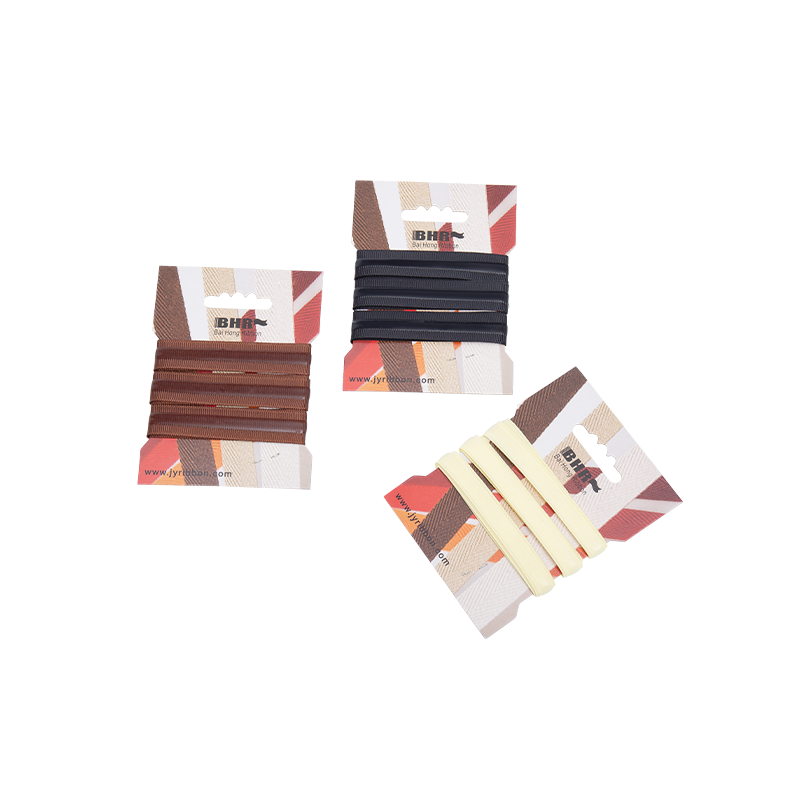 Silicone-Coated Polyester Webbing with Anti-Slip GripPolyester webbing with a silicone surface coating provides anti-slip properties and customizable patterns, suitable for handles, straps, and applications requiring secure grip.View Product →
Send us the load data for your current strap and we will run the same flex and abrasion tests at our Jiangyin lab. We can also produce a sample roll on 25 mm or 50 mm width with the construction that fits your real load path. Jiangyin City Baihong Weaving Band Co., Ltd. has served Europe, the United States, and Japan for over two decades.
FAQ
Selection in one sentence: polyester for outdoor load paths, cotton for skin-contact comfort, and a coated silicone polyester construction when both are required.
How can I quickly identify a polyester webbing sample versus a cotton webbing sample?
Hold the sample near a lighter. Polyester melts, curls, and smells like plastic; cotton burns to ash and smells like burning paper. If you cannot burn it, check the moisture behavior: cotton shrinks or loses stiffness when soaked, polyester stays rigid and snaps back.
Will polyester webbing feel uncomfortable against bare skin?
At widths under 50 mm, the hand feel is firm but tolerable. If the strap touches bare skin for a sustained period, we specify a coated silicone or a soft-toned polyester construction. But if the application is a waistband or a hatband, cotton webbing remains the more comfortable choice.
Can polyester webbing be matched to cotton webbing in a brand color system?
Yes, but the dye chemistry differs. Cotton uses reactive dyes; polyester uses dispersed dyes that penetrate the filament. To avoid metamerism under different lighting, send us both materials in the same color-matching session so the lab can adjust the recipe.
What is the typical minimum order quantity for custom-width webbing?
Minimum order quantities depend on loom width and construction. Polyester webbing typically starts at 1,000 m per width; cotton webbing starts at 2,000 m. We confirm actual roll samples with your local purchasing team.
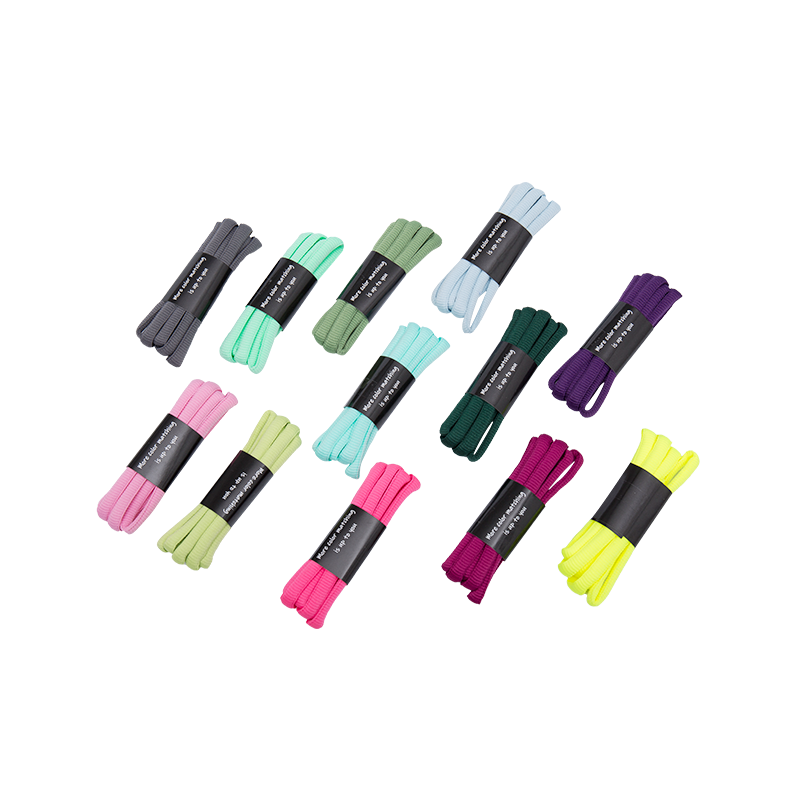
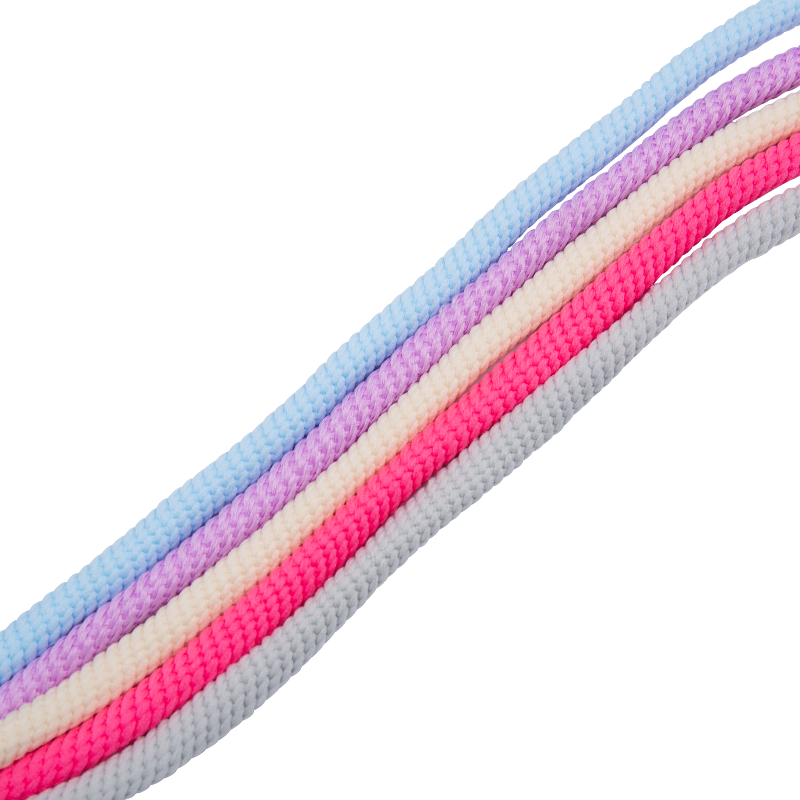
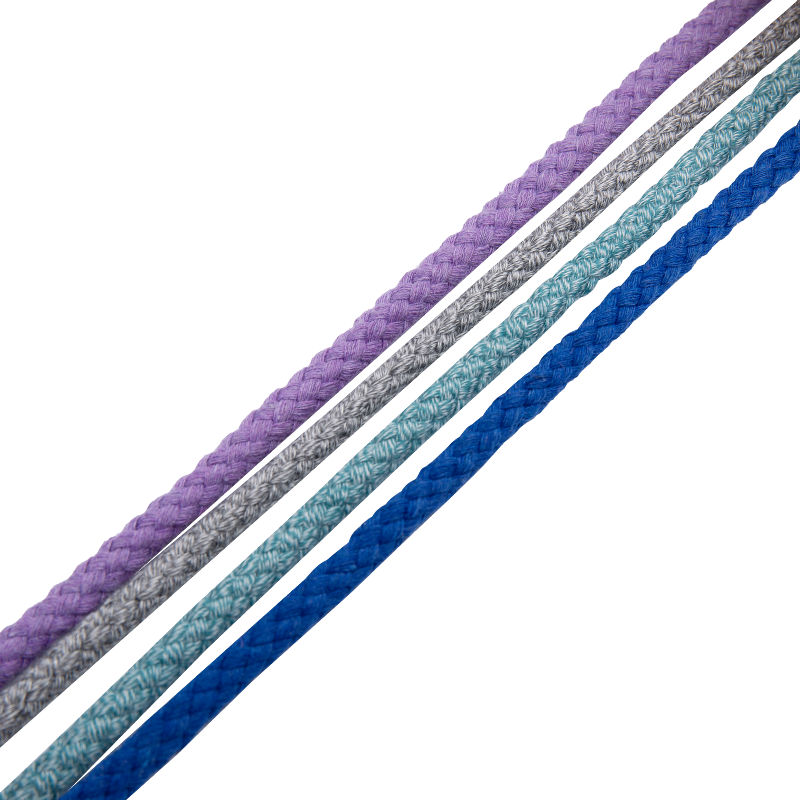
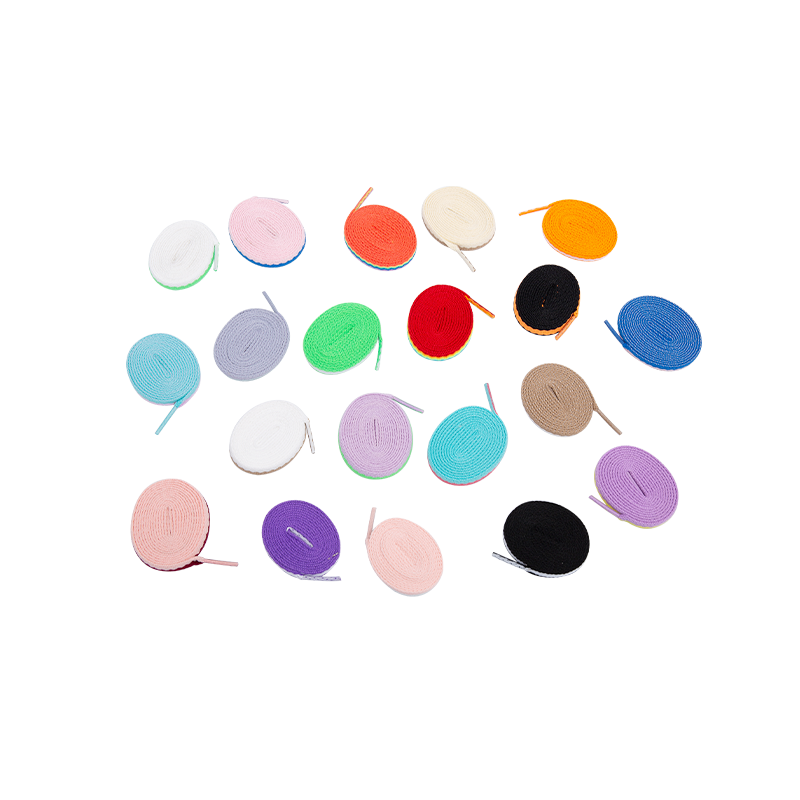

Over the years, we have been providing high-quality, safe and reliable products for the clothing and footwear industries.
- Quick Links
- Contact Information
-
-
 NO.137-1 Chenglu Road, Huashi Town, Jiangyin City214421, Jiangsu, China
 -
 +86 138-0616-9220
 -
 Lhbhzd@126.com
bh@jyribbon.com
sales2@jyribbon.com
-
- Mobile QR Code

